
Electrics · All 32 London boroughs
Electricians in London: Sockets, Lighting, Rewires and Safety Checks
Much of London’s housing still runs on old fuse boxes, tired wiring and circuits extended by previous owners, and many landlords now need a safety report every five years. Soraiz Builders adds and moves sockets, fits lighting and downlights, finds faults, replaces consumer units, rewires homes and carries out electrical condition reports. Notifiable work is carried out and certified by a registered electrician, and we reply to every enquiry within 2 hours.
Quick answer: 2026 London prices
An electrician in London typically charges £55 to £75 an hour or £300 to £450 a day. Adding a new socket costs about £150 to £250, an electrical condition report (EICR) £250 to £400, a new consumer unit £700 to £1,200, and rewiring a 2-bed flat around £5,600.
Send photos of the fuse box and the job, with your postcode, and we reply within 2 hours during business hours.
- Founded 2019
- 250+ London projects
- MyBuilder 5.0 from 23 verified reviews
- Part P work certified
Part P
Does your electrical job need Building Regulations sign-off?
Only three kinds of home electrical work are notifiable under Part P in England: a new circuit, a replacement consumer unit, and changes to circuits in a bathroom or shower room. Pick your job and the box shows whether it is notifiable and which certificate you should get.
What we do
What electrical work do we carry out in London?
From one extra socket to a full rewire. Notifiable work is carried out and certified by a registered electrician; minor work such as like-for-like swaps is done by our team.
Sockets and switches
Extra and moved sockets, USB and smart sockets, outdoor sockets, switches and dimmers, with walls made good afterwards.
- New and moved sockets
- USB and outdoor sockets
- Switches and dimmers
Lighting
Pendants, wall lights, downlights, kitchen under-cabinet lights and outdoor security lights, including new light points and switching.
- Downlights and pendants
- Outdoor and security lights
- New light points
Fault finding and repairs
Circuits that keep tripping, dead sockets, flickering lights and burning smells traced to the cause and repaired safely.
- Tripping RCDs and breakers
- Dead or damaged sockets
- Urgent repairs
New circuits
Dedicated circuits for electric showers, ovens and hobs, kitchen extensions, garden rooms and EV chargers, certified under Part P.
- Shower and cooker circuits
- EV charger supplies
- Extensions and lofts
Consumer units
Old fuse boxes with rewireable fuses replaced by a modern consumer unit with RCD protection, tested and certified.
- Fuse box upgrades
- RCD and RCBO protection
- Surge protection
Rewires and safety checks
Full and partial rewires planned around plastering and decorating, and electrical condition reports (EICRs) for homeowners and landlords.
- Full and partial rewires
- EICRs for landlords
- Remedial work
Every electrical job includes
- A written price before work starts
- Power isolated and proved dead before work
- Testing of the work before we leave
- The right certificate for the job
- Building Control notified for notifiable work
- Walls and ceilings made good where we chased or cut
2026 costs
How much does an electrician cost in London?
An electrician in London typically charges £55 to £75 an hour or £300 to £450 a day in 2026, with a call-out fee of about £90 to £150 that usually covers the first hour.
The tables below are typical market ranges, not fixed Soraiz Builders prices. Every job is priced in writing before work starts.
Rates and small jobs
| Job | Typical London cost | Notes |
|---|---|---|
| Hourly rate | £55–£75 | Half day £180–£280 |
| Day rate | £300–£450 | Longer jobs and rewires |
| Call-out | £90–£150 | Emergency call-outs £180–£400 |
| Replace a socket | £80–£120 | USB or smart socket £90–£150 |
| Add a new socket | £150–£250 | Moving a socket £140–£240 |
| Replace a light fitting | £80–£130 | New pendant on a new point £100–£160 |
| Downlights | £70–£120 each | A set of six £450–£800 |
| Outdoor or security light | £110–£220 | Fittings extra |
Sources: Fantastic Services electrician, socket replacement and light installation cost guides (2026, London and South East column). Typical market ranges, not fixed Soraiz Builders prices.
Bigger jobs and certificates
| Job | Typical London cost | Notes |
|---|---|---|
| EICR (condition report) | £250–£400 | Smaller flats often less; repairs extra |
| Replace a consumer unit | £700–£1,200 | Tested and certified |
| Rewire a 1-bed flat | About £4,000 | 3–4 days |
| Rewire a 2-bed flat or house | About £5,600 | Flats 3–4 days, houses 5–7 |
| Rewire a 3-bed house | About £8,100 | Range £6,500–£10,000 |
| Rewire a 4-bed house | About £10,500 | Plastering and decorating extra |
| EV charger, 7 kW | £800–£1,200 | UK figure; grant of up to £500 for flat owners and renters |
Sources: Fantastic Services EICR, fuse box and rewiring cost guides (2026, London), MyJobQuote house rewire costs in London (September 2026), MyBuilder and Fantastic Services EV charger costs (2026), GOV.UK chargepoint grant guidance. Typical market ranges, not fixed Soraiz Builders prices.
A rewire is usually done with plastering and decorating in the same project. See the House Renovation Cost in London (2026) guide for how electrics fit into a full renovation budget.
Rules
Which electrical rules apply to your home?
Part P decides which work must be certified, BS 7671 sets how it is done, and landlords have their own inspection duty.
- Part P of the Building Regulations: in England, a new circuit, a replacement consumer unit and any addition or alteration to circuits in a room with a bath or shower must be notified. It is either done by an electrician registered with a government-approved competent person scheme, who self-certifies it and notifies Building Control, or Building Control is told before work starts and inspects it for a fee. Like-for-like replacements and additions to existing circuits elsewhere are not notifiable, but must still be done safely.
- Certificates: new circuits, consumer units and rewires get an Electrical Installation Certificate; smaller additions get a Minor Electrical Installation Works Certificate; notifiable work also gets a Building Regulations compliance certificate. Keep them: buyers’ solicitors ask for them.
- The wiring regulations (BS 7671): since Amendment 2 in 2022, sockets rated up to 32 A should have 30 mA RCD protection, and arc fault detection devices are recommended on socket circuits in homes.
- Landlords: the Electrical Safety Standards in the Private Rented Sector (England) Regulations 2020 require an EICR at least every five years, a copy to tenants within 28 days (and to new tenants before they move in), and any remedial work within 28 days or sooner if the report says so. Councils can fine up to £30,000.
- Homeowners: Electrical Safety First recommends an electrical inspection at least every 10 years. It is also worth having one before buying an older home.
- Smoke and CO alarms in rented homes: a smoke alarm is required on every storey, and a carbon monoxide alarm in any room with a fixed combustion appliance other than a gas cooker.
London homes
What are the signs your wiring needs attention?
An old fuse box is not automatically illegal, but these are the signs that an inspection, and possibly a rewire, is due.
Old fuse box
Rewireable fuses, a wooden backboard or no RCD switches. Common in London homes last rewired before the 1990s, and the first thing an EICR flags.
Old cable
Rubber or fabric-covered cable, round-pin sockets, or light circuits with no earth. Found in some Victorian and interwar homes that were never fully rewired.
Heat and noise
Scorch marks, warm or buzzing sockets and switches, or a burning smell. Switch off at that point and get it checked.
Tripping and flickering
An RCD or breaker that trips repeatedly, or lights that flicker, usually means a fault, an overloaded circuit or failing equipment.
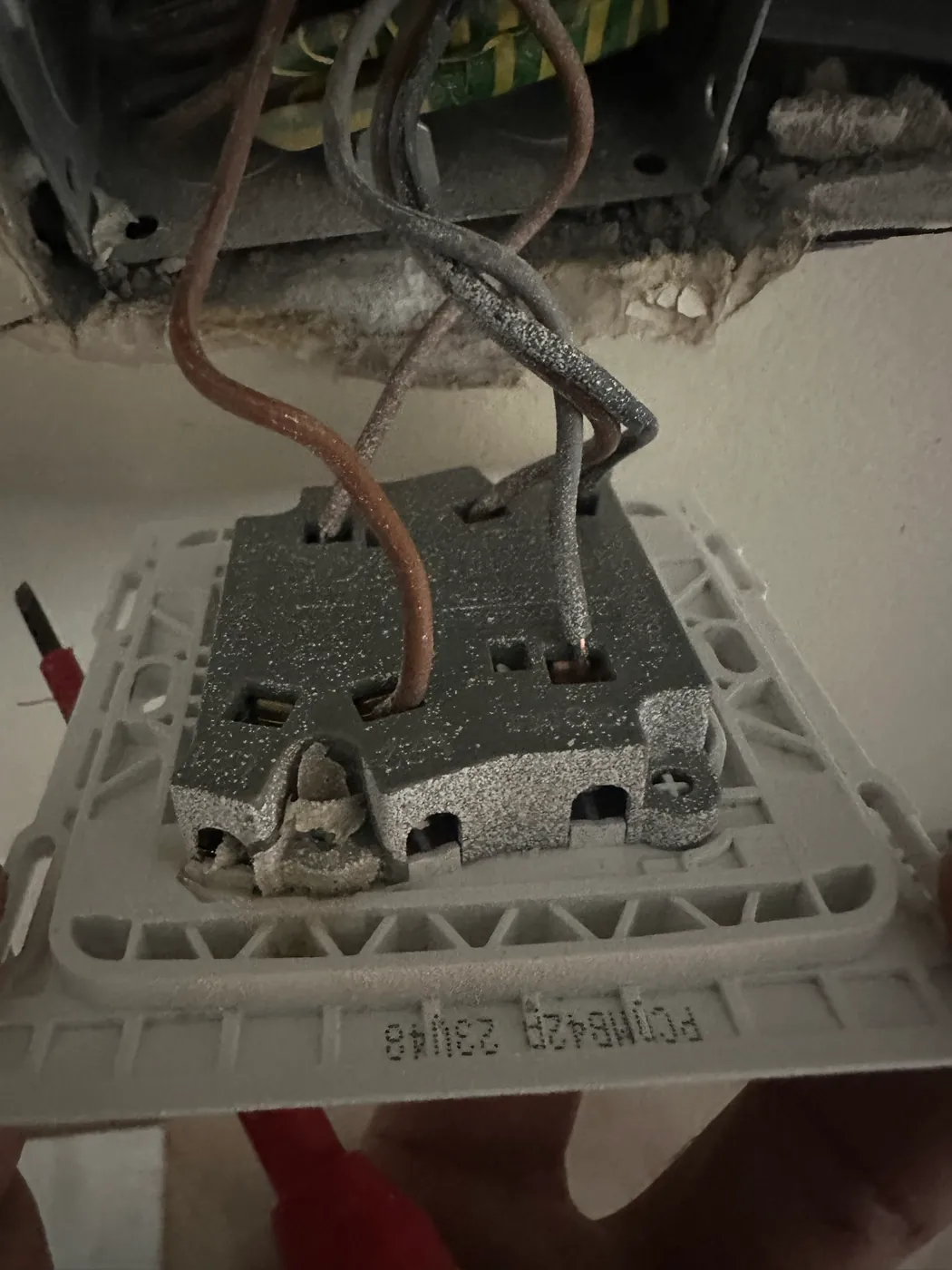
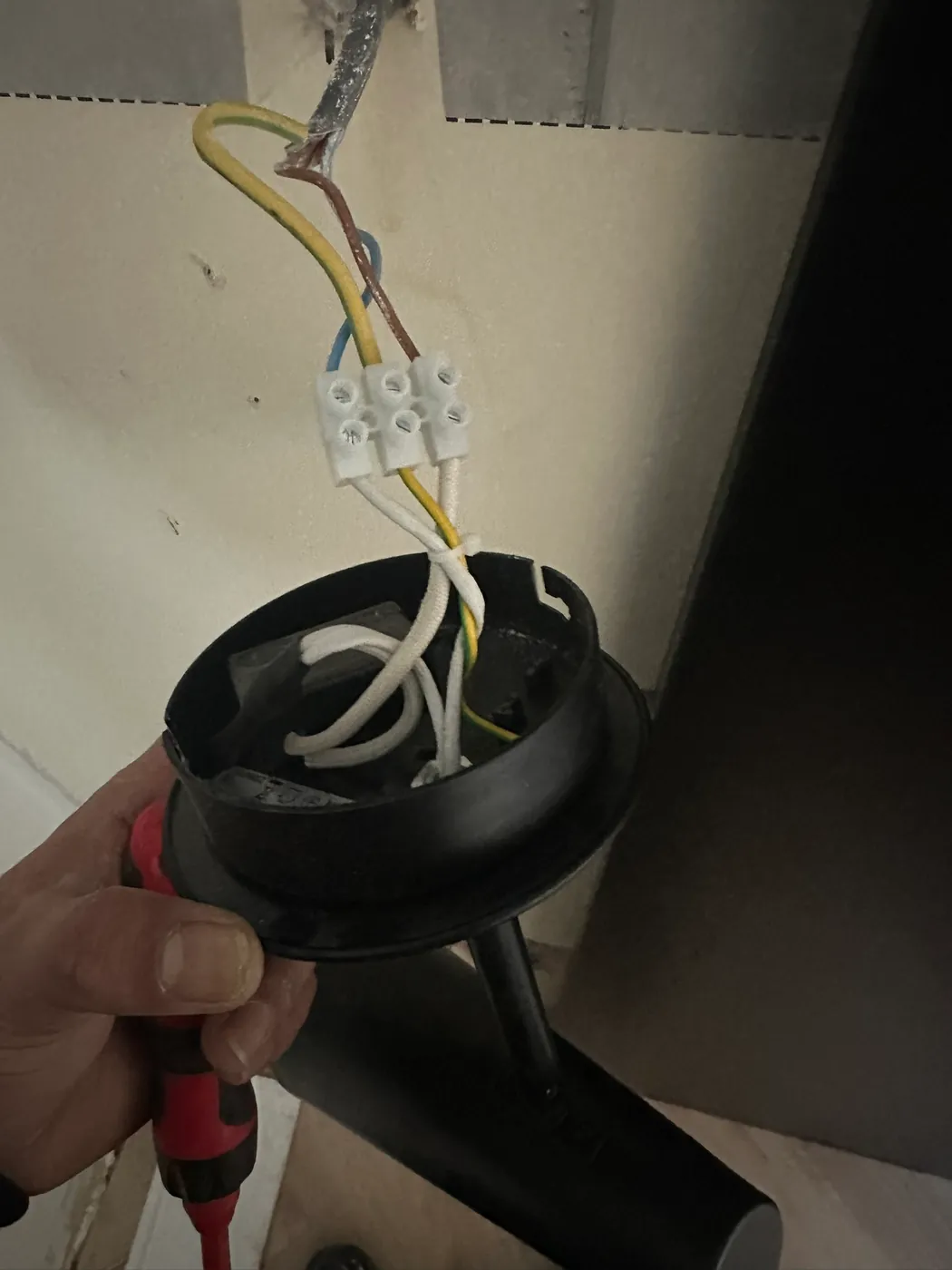
Recent Electrics projects
Real jobs that included this work, documented from the dated photos taken on site.
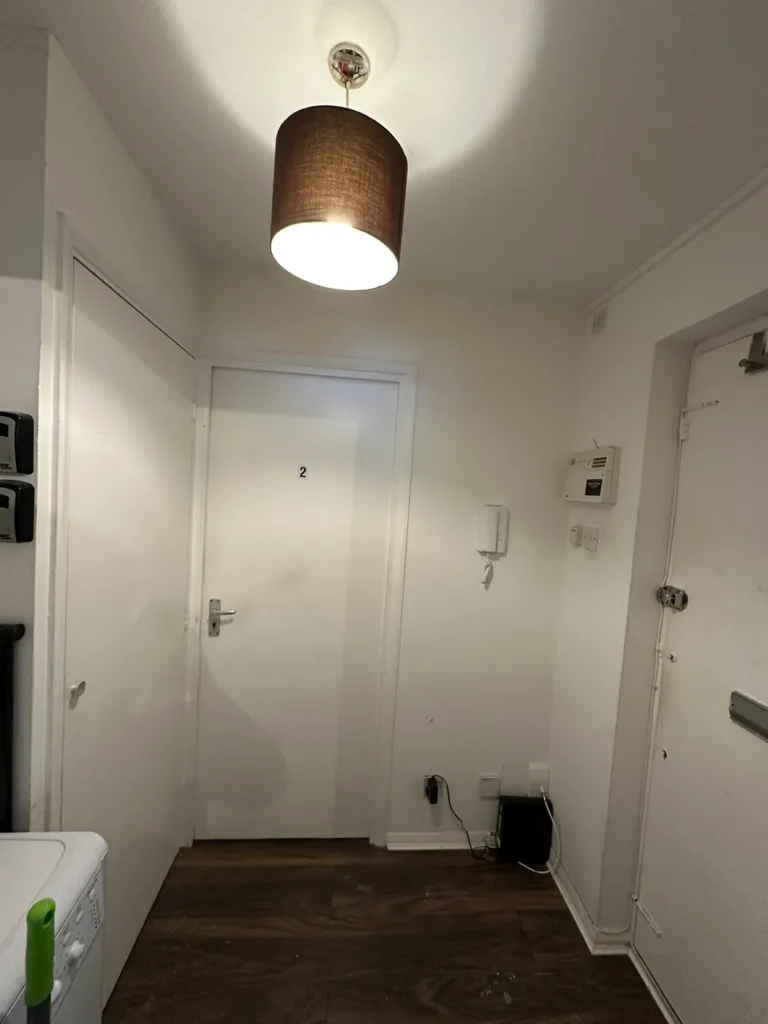 10 photos
Deptford (Lewisham)
Studio flat refit in Deptford
A Deptford studio flat refitted over two and a half weeks in May 2025: a refreshed shower room with a new basin unit, work on the electric shower, a slatted feature wall, new lighting, furniture assembly and decoration.
Read the case study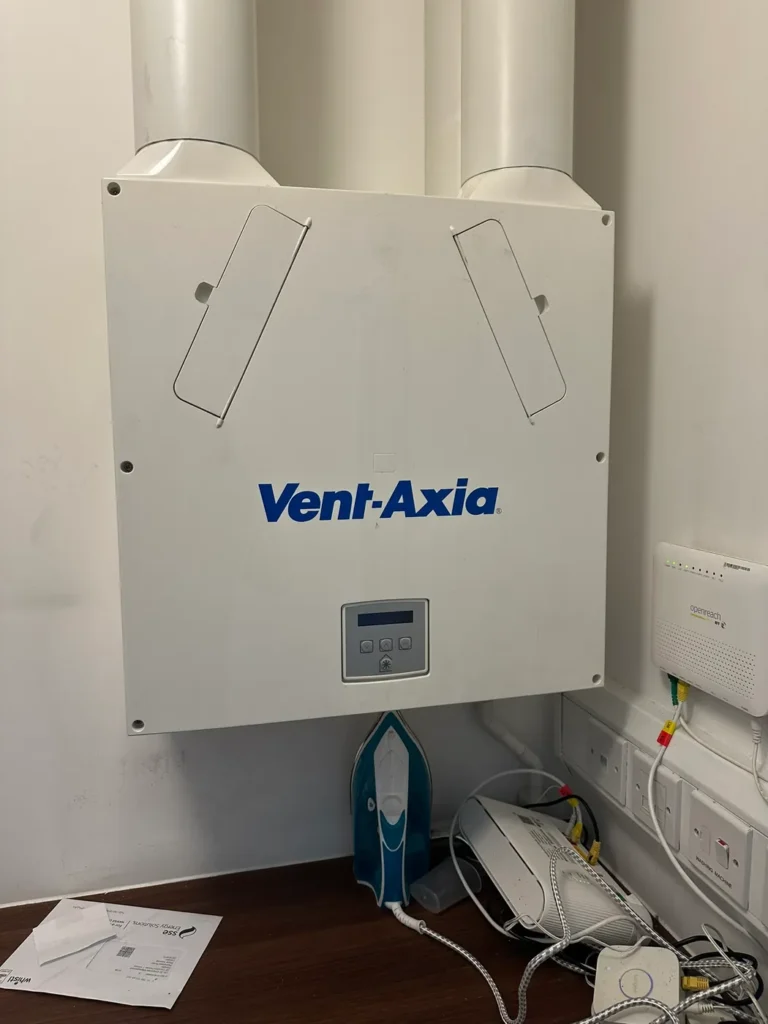
Woolwich Arsenal, Woolwich (Greenwich)
Ventilation unit electrics in Woolwich
Electrical work at a Vent-Axia heat recovery ventilation unit in a Woolwich home.
Surrey Docks, Rotherhithe (Southwark)
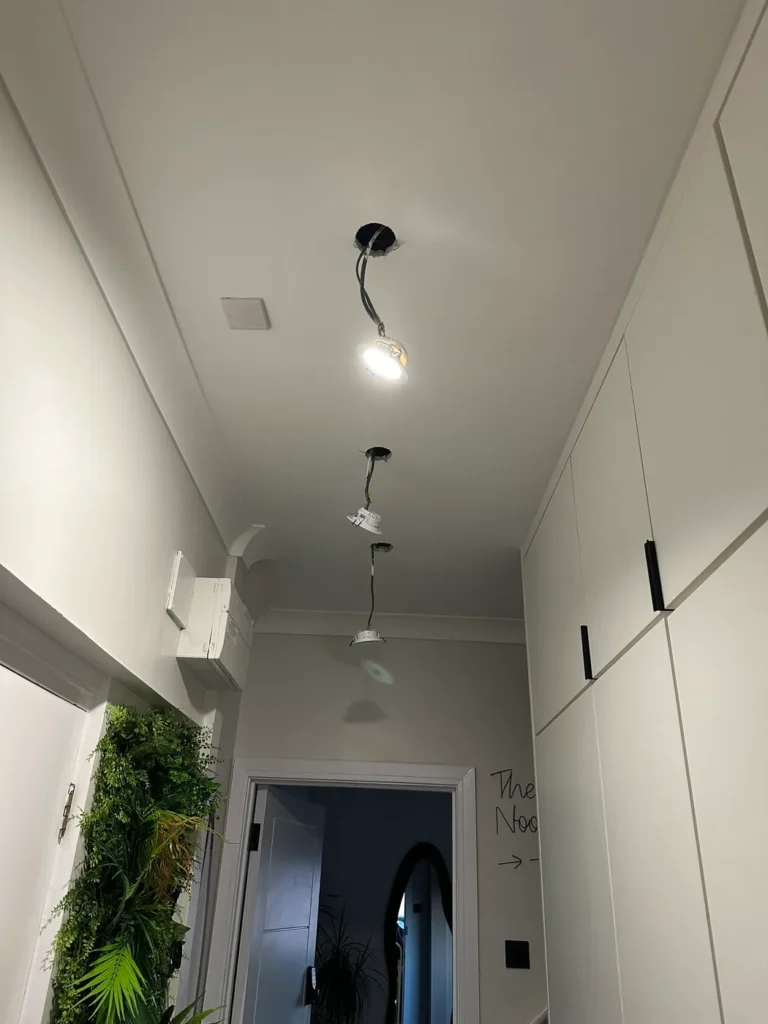
Lighting, sockets and a new radiator in Rotherhithe
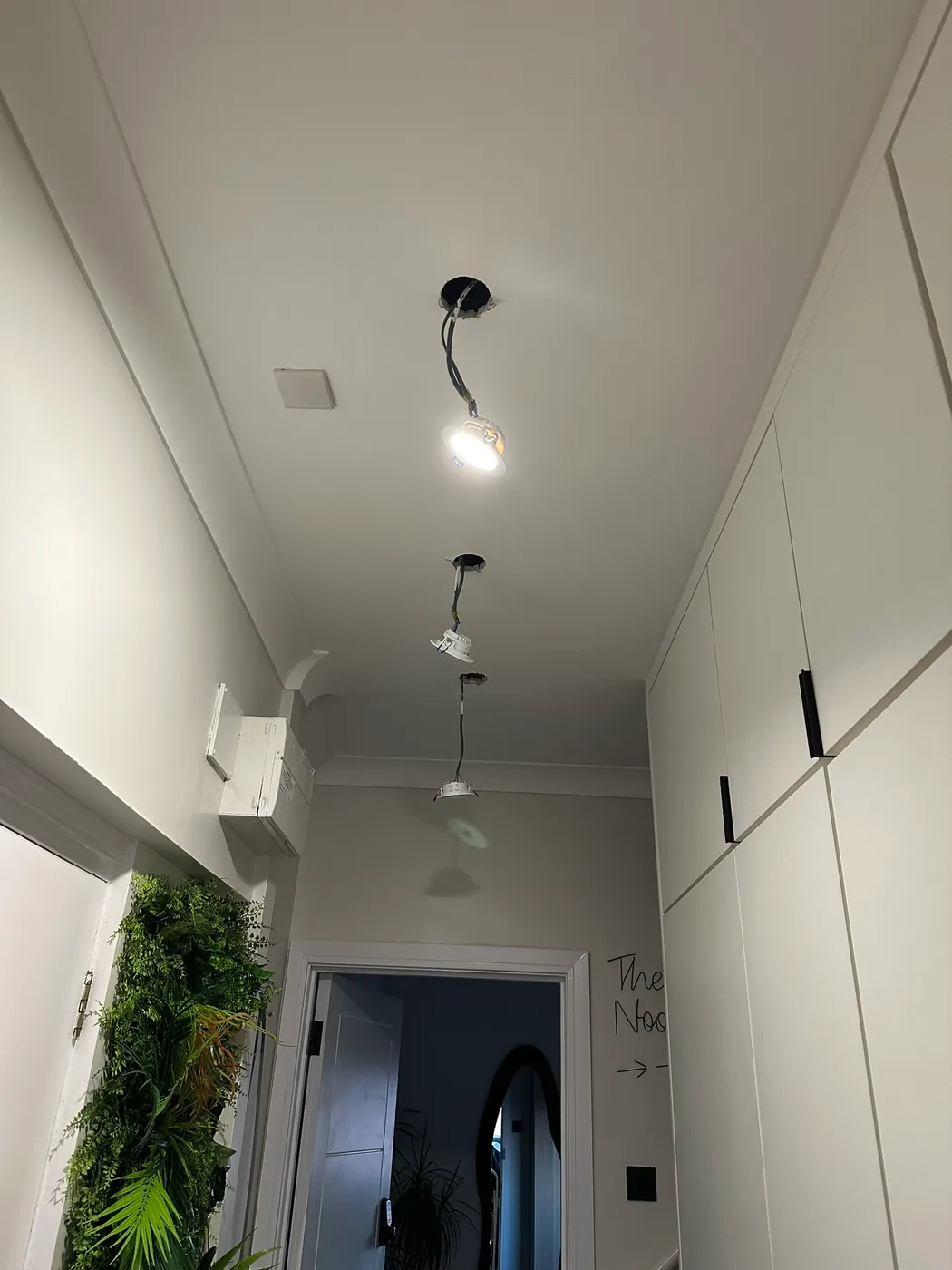
Hallway pendant lights rewired and fitted, a faulty socket replaced, and a new anthracite column radiator installed.
How it works
What happens when you book an electrician with us?
Tell us the job
Send photos of the fuse box and the area, what you want done, and your postcode. For a fault, tell us what trips and when.
Check and plan
We look at the existing installation, confirm whether the work is notifiable under Part P, and plan cable routes to keep damage to walls low.
Written price
You get a price listing the work, the certificate you will receive and any making good, before work starts.
Do the work and test
Power is isolated, the work done, and every circuit touched is tested before it goes back on.
Certificates
You receive the installation or minor works certificate, and for notifiable work the Building Regulations compliance certificate follows from the registered electrician’s scheme.
Rewiring
What happens during a rewire?
A rewire replaces the cables, sockets, switches and usually the consumer unit, and takes about 3 to 4 days in a flat and 5 to 7 in a terraced or semi-detached house. The first fix runs new cables through floors and chased walls while the house is stripped back; the second fix adds the sockets, switches and fittings once plastering is done. Because it disturbs walls and floors, a rewire is best planned with plastering and decorating, and is easiest in an empty property. Our Plastering & Rendering and Painting & Decorating teams make good afterwards.
How to choose an electrician in London
- Notifiable work done by a registered electrician
- Registration checked on the scheme’s website
- A written quote naming the certificate you will get
- Making good included or priced
- Public liability insurance
- Recent reviews you can check
Questions
Electrical work in London: frequently asked questions
How much does an electrician charge in London?
An electrician in London typically charges £55 to £75 an hour in 2026, £300 to £450 for a full day, and a call-out fee of about £90 to £150 that usually covers the first hour. Emergency call-outs cost more, around £180 to £400. Small jobs such as adding a socket are often quoted as a fixed price instead.
What electrical work needs Building Regulations approval?
In England, three kinds of work are notifiable under Part P: installing a new circuit, replacing a consumer unit, and adding to or altering circuits in a room with a bath or shower. The work must be done by an electrician on a competent person scheme who self-certifies it, or notified to Building Control before it starts. Like-for-like swaps are not notifiable.
How much does it cost to rewire a house in London?
Typical London figures are about £4,000 for a 1-bed flat, £5,600 for a 2-bed flat or house, £8,100 for a 3-bed house and £10,500 for a 4-bed house, including a new consumer unit and testing. Plastering and decorating afterwards are usually extra. A flat takes about 3 to 4 days and a terraced or semi-detached house 5 to 7.
How often do landlords need an EICR?
At least every five years in England, or sooner if the last report says so. Landlords must give existing tenants a copy within 28 days and new tenants one before they move in, and complete any remedial work within 28 days or the shorter time given. Councils can fine up to £30,000 per breach. An EICR in London typically costs £250 to £400.
Do I need to replace my fuse box?
Not automatically, but an old fuse box with rewireable fuses or no RCD protection is usually flagged on an inspection, and modern consumer units protect against electric shock in a way old boards do not. Replacing one in London typically costs £700 to £1,200, is notifiable under Part P, and comes with an Electrical Installation Certificate.
Why does my electricity keep tripping?
Usually a faulty appliance, moisture in an outdoor socket or light, an overloaded circuit, or damaged wiring. Unplug everything on the circuit, reset the switch, then plug items back one at a time to find a faulty appliance. If it trips with nothing plugged in, or you notice burning smells or scorch marks, switch off and have an electrician trace the fault.
Can I get a grant for an EV charger in a London flat?
Yes, if you own and live in a flat or rent your home and have private off-street parking. The government chargepoint grant covers 75% of the cost up to £500 per socket from April 2026 to March 2027. A standard 7 kW home charger usually costs £800 to £1,200 installed, and the new circuit is notifiable work certified under Part P.
How often should a home’s electrics be checked?
Electrical Safety First recommends an inspection at least every 10 years for an owner-occupied home and every five years for a rented one, which is also the legal minimum for landlords in England. It is also worth having one before buying an older property, after a flood or fire, or if you notice scorch marks, tripping or flickering lights.
Verified reviews
What London clients say about Soraiz Builders
★★★★★
“Soraiz arrived on time and completed the job in the given time. he is very particular to detail .very fair price for the task completed.”
sahil javed, Croydon · Mounted a TV on the wall · April 2024
★★★★★
“Soraiz was excellent! He is professional,and efficient. Fast response and did a great job. I’m satisfied with his work.”
Wahid Rakesh, Holloway · Handyman work · April 2024
★★★★★
“Was very professional and polite, communicated clearly throughout the process, including a clear quote and what was included in the work.”
Victoria, Watford · Plaster wall repair · May 2025
Rated 5.0 from 23 verified reviews on MyBuilder. These reviews reflect Soraiz Builders’ wider portfolio of work across London, not electrical jobs specifically.
Get started
Get a free electrical quote in London
Send photos of the fuse box and the job, and your postcode. We reply within 2 hours during business hours and give you a written price, including the certificate you will receive, before work starts.
- Founded 2019
- 250+ London projects
- MyBuilder 5.0 from 23 verified reviews
- All 32 boroughs