
Plastering & Rendering · All 32 London boroughs
Plasterers in London: Skimming, Replastering and Rendering
A London wall can be Victorian lime on timber lath, a 1970s Artex ceiling, cement render over solid brick or modern plasterboard, and each one fails, and is fixed, in a different way. Soraiz Builders skims and patches, replasters back to brick, boards and dry-lines, skims over textured ceilings, renders and re-dashes outside walls, and fits external wall insulation, lime work, coving and polished plaster, with a reply to every enquiry within 2 hours.
Quick answer: 2026 London prices
A plasterer in London typically charges £280 to £480 a day. Plastering a single room costs about £550 to £1,100, a patch repair £150 to £320, and skimming over an existing wall £18 to £32 per m². External render runs from about £40 to £100 per m² depending on the system, before scaffold.
Send photos of the wall or ceiling and your postcode, and we reply within 2 hours during business hours.
- Founded 2019
- 250+ London projects
- MyBuilder 5.0 from 23 verified reviews
- Fixed-price quotes
Which fix?
Does your wall need a skim, replastering or something else?
A skim fixes a sound but tired surface; plaster that sounds hollow, crumbles or sits on a damp wall has to come off first. Tick what you can see and the box below tells you which repair usually fits, so you know what to ask for.
What we do
What plastering and rendering work do we carry out?
Inside and out, from a patch behind a new socket to rendering the whole house. Decorating once the plaster is dry is covered on our Painting & Decorating in London page.
Skimming and patch repairs
Tired, cracked or uneven walls and ceilings skimmed smooth, and holes left by electricians, plumbers and removed fittings made good.
- Wall and ceiling skims
- Patch repairs
- Making good after other trades
Full replastering
Blown, crumbling or hollow plaster hacked off back to brick, then the wall rebuilt with bonding or backing coats and a finish skim.
- Hacking off to brick
- Backing and finish coats
- New corner beads
Plasterboard and dry lining
Walls and ceilings boarded and skimmed, stud partitions built, and failed lath-and-plaster ceilings overboarded or replaced.
- Stud partitions
- Lath ceilings overboarded
- Insulated plasterboard
Artex and textured ceilings
Textured ceilings and walls skimmed or overboarded flat. Anything applied before 2000 is tested for asbestos first; we do not remove asbestos.
- Skim over
- Overboard and skim
- Testing arranged first
Rendering and pebbledash
Sand and cement, monocouche and silicone thin-coat renders, new or repaired, and pebbledash patched, re-dashed or rendered over.
- Cracked and blown render repaired
- Through-coloured systems
- Scaffold arranged when needed
External wall insulation
Insulation boards fixed to the outside walls and finished in render, which keeps the room sizes and improves warmth in solid-walled homes.
- Insulation and render system
- Building Regulations checked
- Planning checked first
Lime plaster and lime render
Breathable lime repairs and renders for Victorian and older solid-wall homes, where gypsum and cement can trap moisture.
- Lime plaster repairs
- Lime render
- Matched to the original
Replastering after damp
Once a damp specialist has treated the cause, salt-contaminated plaster is hacked off and replaced with a salt-resistant renovating plaster.
- Contaminated plaster removed
- Renovating plaster systems
- Not gypsum on damp walls
Coving, cornice and polished plaster
New coving fitted, period cornices and ceiling roses repaired to match, and Venetian polished plaster for feature walls.
- Coving and cornice
- Ceiling roses
- Venetian plaster
Every plastering job includes
- A written price listing walls, ceilings and the method
- Floors, doors and fittings covered before work starts
- Loose and hollow plaster found and cut out first
- Beads on corners and edges
- Debris bagged and taken away
- Advice on drying time before you paint
2026 costs
How much does a plasterer cost in London?
A plasterer in London typically charges £280 to £480 a day in 2026, and plastering a single room costs about £550 to £1,100, roughly 20 to 30% more than elsewhere in the UK.
The tables below are typical market ranges, not fixed Soraiz Builders prices. Every job is priced in writing before work starts.
Interior plastering
| Job | Typical London cost | Notes |
|---|---|---|
| Day rate | £280–£480 | Inner London at the top of the range |
| Skim an existing wall | £18–£32 per m² | Sound plaster, filled and skimmed |
| Replaster, or board and skim | £30–£58 per m² | Old plaster removed or new boards fixed |
| Plaster a single room | £550–£1,100 | Size, condition and ceiling height set where it lands |
| Patch repair | £150–£320 | Minimum charges of around £120–£150 are common |
| Small wall, up to 10 m² | £200–£400 | Skim or replaster |
| Chimney breast | £250–£520 | Replastered |
| Whole three-bed house | £4,800–£9,000 | Usually during a renovation |
Sources: Fantastic Services plastering cost guide (2026, London and South East column), Trade2Base plasterer day rates (June 2026). Typical market ranges, not fixed Soraiz Builders prices.
Ceilings and textured coatings
| Job | Typical cost | Notes |
|---|---|---|
| Skim a ceiling | £25–£45 per m² | London and South East |
| Skim over Artex | £200–£450 | Per ceiling; seals the texture in |
| Overboard and skim Artex | £350–£700 | Per ceiling; for heavy or damaged texture |
| Asbestos sample test | £50–£100 | UKAS-accredited lab analysis |
| Overboard a lath and plaster ceiling | £400–£650 | Average ceiling, boarded and skimmed |
| Replace a lath and plaster ceiling | £900–£1,200 | Large bedroom, taken down, boarded and skimmed, waste removed |
Sources: Fantastic Services (2026), Trade2Base Artex removal and cover pricing (June 2026), Book A Builder UK ceiling replacement costs (2026). Typical market ranges, not fixed Soraiz Builders prices.
Rendering and external wall insulation
| System | Typical cost | Mid-terrace (45–70 m²) |
|---|---|---|
| Sand and cement | £40–£60 per m² | £2,600–£4,600 |
| Pebbledash | £40–£55 per m² | |
| Monocouche | £50–£70 per m² | £3,200–£5,400 |
| Silicone thin-coat | £60–£100 per m² | £3,600–£7,000 |
| Lime render | £60–£95 per m² | |
| External wall insulation | £110–£200 per m² | 2-bed terrace about £7,000–£12,000 |
| Remove old render | £10–£25 per m² | Typically £1,000–£3,000 |
| Scaffold | £500–£2,500 | Depending on height and size |
Sources: BestBuilders house rendering costs (updated September 2026, UK ranges; London and the South East run 15–30% higher), Book A Builder UK and The Green Age external wall insulation costs (2026). Typical market ranges, not fixed Soraiz Builders prices.
Decorative plaster
| Job | Typical cost | Notes |
|---|---|---|
| Plaster coving | £40–£100 per metre | Supply and fit; an average room £600–£1,700 |
| Bespoke or period cornice | £60–£120+ per metre | Matched profiles cost more |
| Venetian plaster | £90–£150 per m² | Feature wall of 10–12 m² about £900–£1,800 |
Sources: MyJobQuote plaster coving and Venetian plaster costs (2026), Trade2Base coving costs (2026). Typical market ranges, not fixed Soraiz Builders prices.
Plastering inside a bigger project is priced as part of it. See the House Renovation Cost in London (2026) guide for how plastering fits into a full renovation budget.
Materials
Lime, gypsum or cement: which plaster and render suit your home?
Match the material to the wall: gypsum plaster and plasterboard for modern and cavity walls, lime for pre-1919 solid walls, and a render system chosen for how much the wall needs to breathe and how much painting you want to do. Most plaster and render failures in older London homes come from the wrong material, not poor workmanship.
Inside
Modern gypsum plaster and plasterboard are fast, smooth and right for most homes built after the Second World War. Victorian and Edwardian houses were plastered in lime, which lets moisture in solid brick walls escape. Patching those walls in gypsum or cement can trap that moisture, so the patch, or the plaster around it, blows and cracks. Where an old wall is damp, gypsum is the wrong choice altogether, because the salts drawn up by damp attract moisture back into it.
Outside
| Render | Finish | Breathability | Best for |
|---|---|---|---|
| Sand and cement | Painted with masonry paint | Low | Modern cavity walls and repairs to existing cement render |
| Monocouche | Through-coloured, no painting | Medium | Low-maintenance finish on modern walls |
| Silicone thin-coat | Through-coloured, water-repellent | Medium to high | Crisp finishes and external wall insulation systems |
| Lime | Limewash or breathable paint | High | Pre-1919 solid brick and period homes |
| Pebbledash | Stones in a render coat, often painted | Low | Repairs on 1930s semis that already have it |
Render should stop above the damp-proof course on a bell-cast bead, about 150 mm above ground, so it does not carry ground moisture up the wall. It should not go on in frost or below about 5°C. A well-applied render lasts roughly 20 to 50 years depending on the system and exposure.
Rules
Do you need planning permission or Building Regulations approval?
Plastering inside rarely needs either, but re-rendering most of a wall can trigger the Building Regulations, and new render in a conservation area needs planning permission. These are the rules we check before quoting exterior work.
- Building Regulations, Part L: replacing the render or the plaster on 25% or more of an external wall counts as renovating it, so Building Regulations normally apply and the wall should be insulated to the current standard at the same time, unless that is not technically feasible or would not pay back within 15 years. The work goes through Building Control. This is why a full re-render is often the moment to add external wall insulation.
- Planning in conservation areas: under the permitted development rules, cladding any part of a house in a conservation area with render, pebbledash, stone, timber, plastic or tiles is not permitted development, so it needs planning permission. London councils regularly refuse new render or external insulation over original brick fronts.
- Planning elsewhere: outside conservation areas, rendering a house is usually permitted development if the materials are of a similar appearance to the existing house. Changing a brick front to render can fail that test, so check with your council first. Listed buildings always need consent.
- Asbestos in textured coatings: asbestos was banned in the UK in 1999, and Artex-type coatings applied before then may contain it. It cannot be identified by eye, so a sample is tested at a UKAS-accredited lab before the coating is sanded, scraped or drilled. Skimming or overboarding over sound texture seals it in; removal of asbestos is specialist work we do not carry out.
- Leasehold flats: external walls and render normally belong to the freeholder, so exterior work on a flat is arranged through them.
London homes
What plastering problems do London homes have?
The age of the house tells you what is behind the paint, and what will go wrong with it.
Victorian and Edwardian terraces
Lime plaster on solid brick, lath-and-plaster ceilings, and cornices and ceiling roses. Ceilings sag as the plaster loses its grip on the laths, and cement patches from past repairs crack away.
1930s semis
Pebbledash or render on the bays and upper floors, and textured ceilings added in later decades. Pebbledash cracks and lets water in, and failed patches show as hollow areas.
Post-war and 1960s to 80s homes
Gypsum plaster on cavity walls and plenty of Artex. Walls are usually sound and suit a skim; textured ceilings need testing before work starts.
New builds and conversions
Plasterboard fixed with adhesive dabs, which can sound hollow without being faulty. Shrinkage cracks appear in the first year or two as the building dries out.
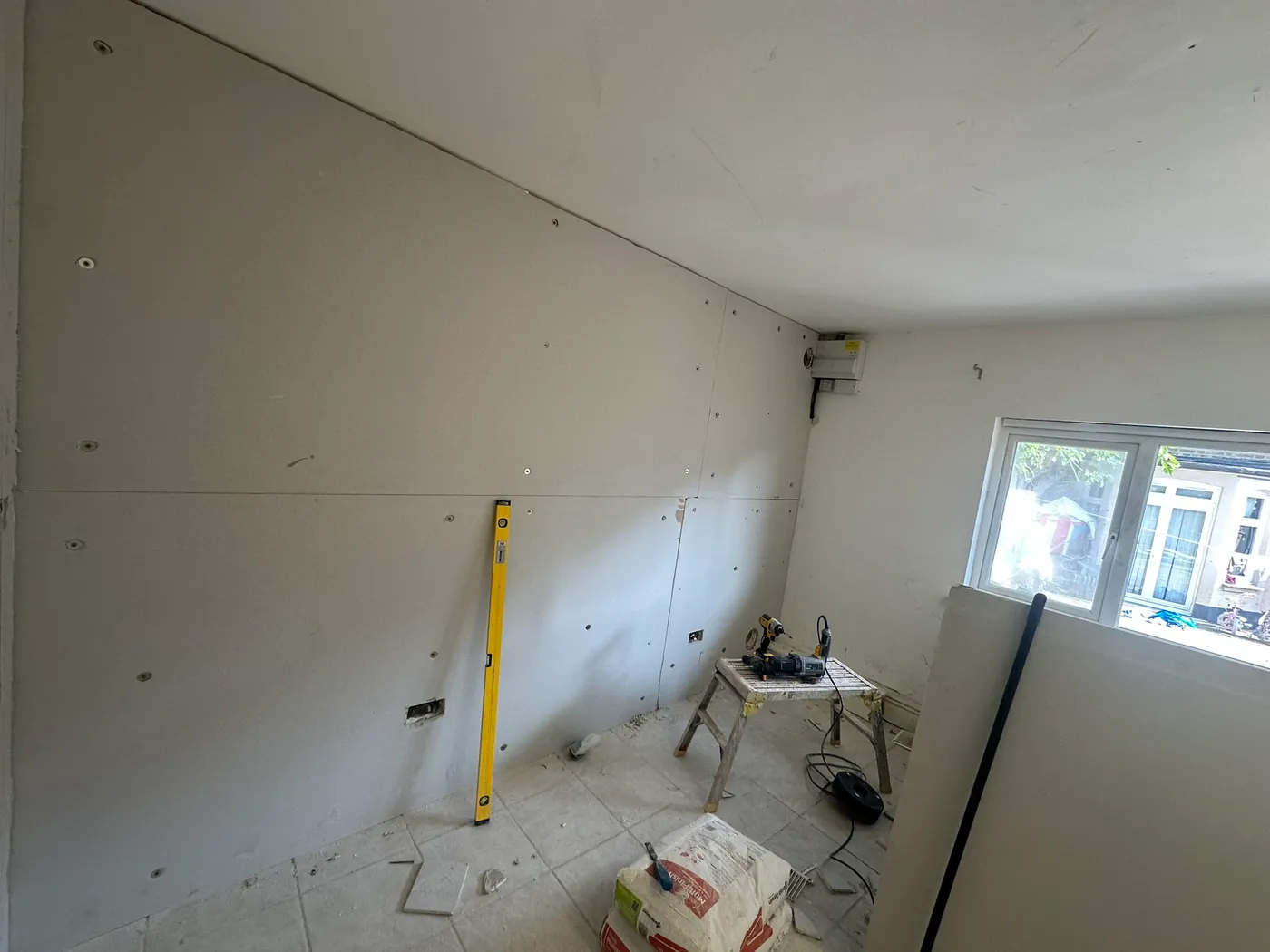
Recent Plastering & Rendering projects
Real jobs that included this work, documented from the dated photos taken on site.
 10 photos
Wealdstone (Harrow)
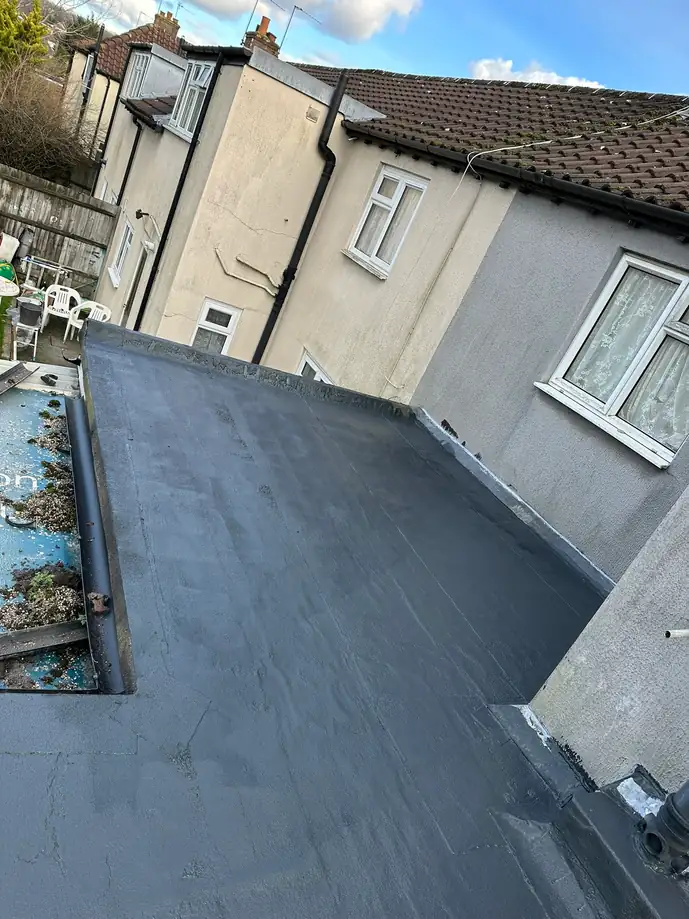
Flat roof re-covering over a rear extension in Wealdstone
The flat roof over a Wealdstone rear extension stripped and re-covered in six days in February 2026, with the water-damaged plaster inside patched once the roof was watertight.
Read the case study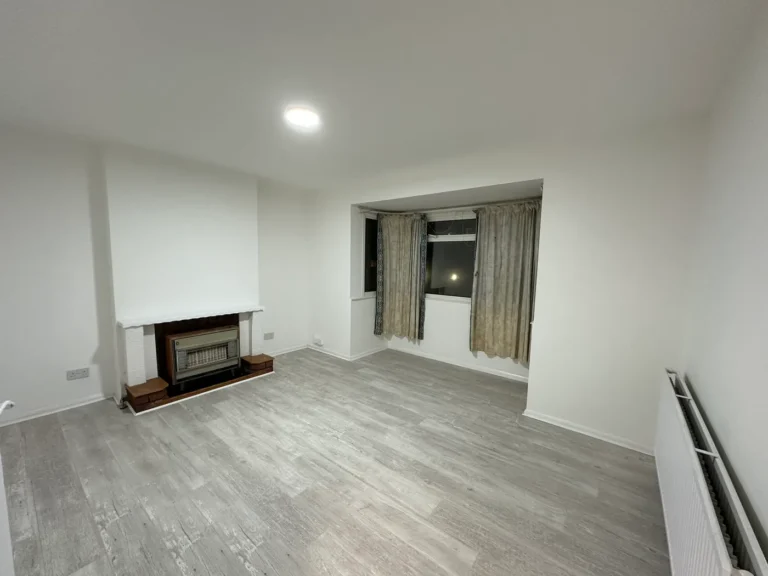 22 photos
Blendon, Sidcup (Bexley)
Whole-home renovation in Blendon, Sidcup
A Sidcup home taken back to bare walls and finished as new over about 13 weeks: re-plastered throughout, a new kitchen and boiler, a new tiled bathroom, new flooring, decoration and a cleared garden.
Read the case study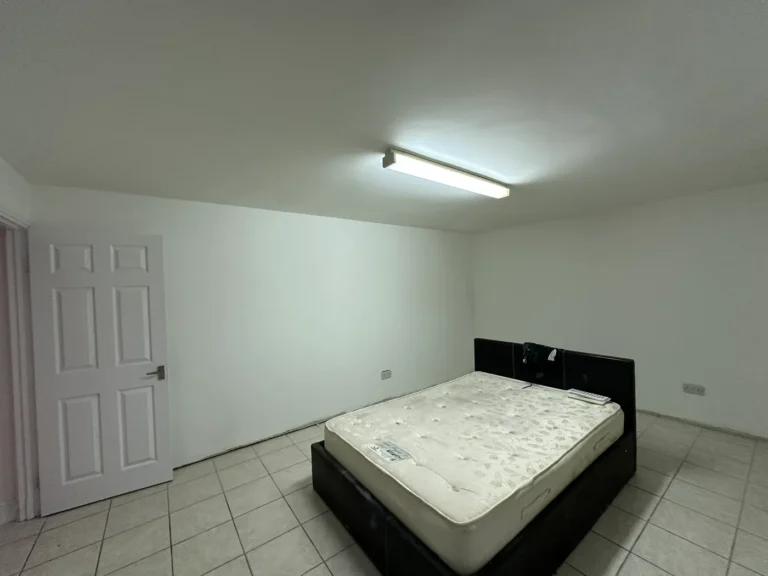 13 photos
Wembley Central (Brent)
Insulation, bathroom refit and flat roof repair in Wembley
A Wembley job run in phases over eight weeks in 2025: a room insulated and re-boarded, a bathroom and shower room refitted, and two sections of flat roof repaired and coated.
Read the case studyHow it works
What happens when you book a plasterer with us?
Send photos or book a visit
Tell us which walls or ceilings and roughly when the house was built. For exterior work, a photo of each elevation helps.
Check the wall
We tap for hollow areas, look for damp and old textured coatings, and confirm what the wall is made of before choosing the method.
Written quote
You get a price listing each wall, ceiling or elevation and the method, plus scaffold, testing or Building Control notification where needed.
Prepare and plaster
Rooms are protected, loose plaster is removed, beads and boards go on, then the backing and finish coats.
Drying advice and sign-off
We walk the work with you and tell you how long to leave it before painting, which for new plaster is usually several weeks.
Drying times
How long does plaster take to dry before you can paint?
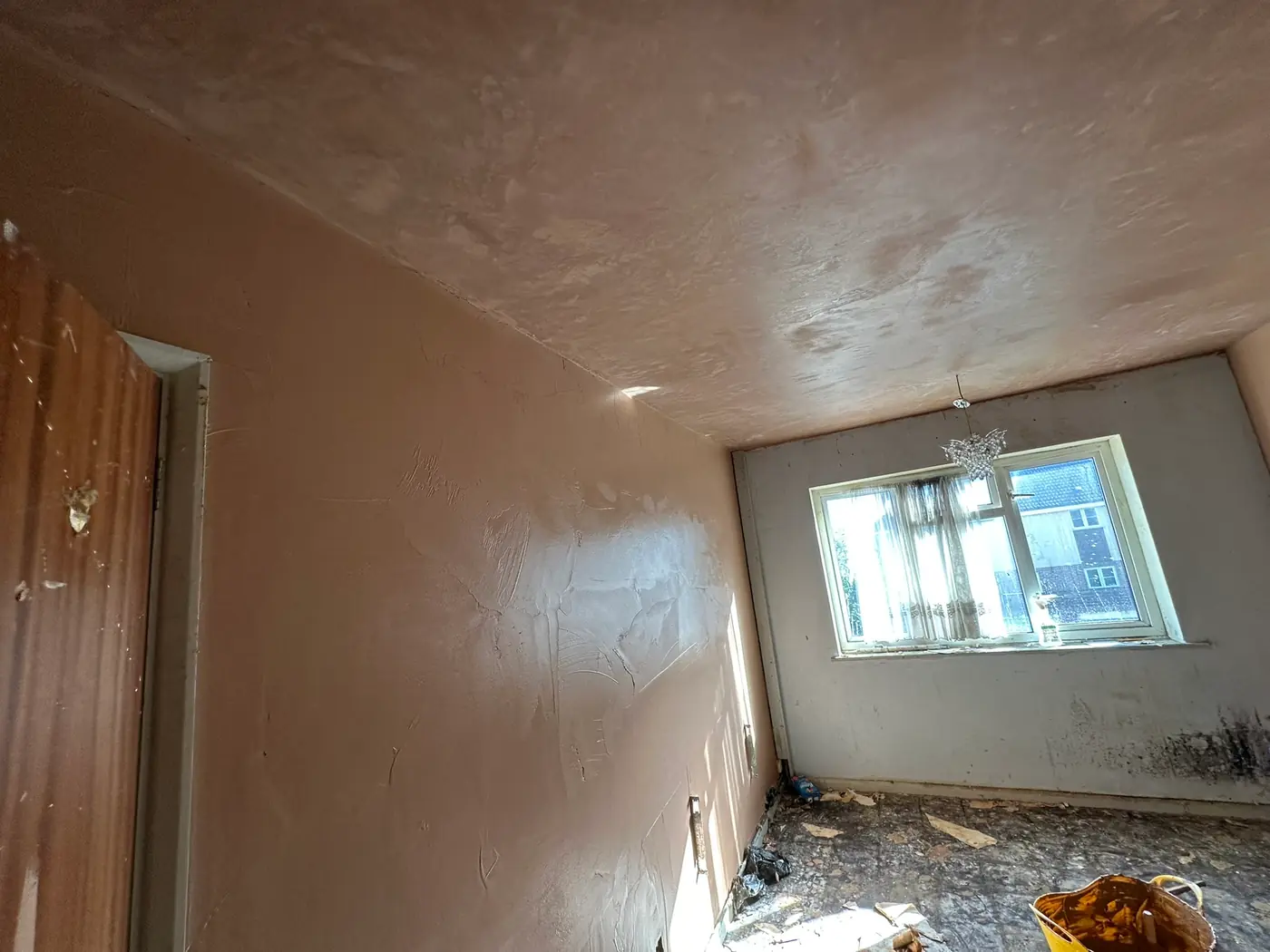
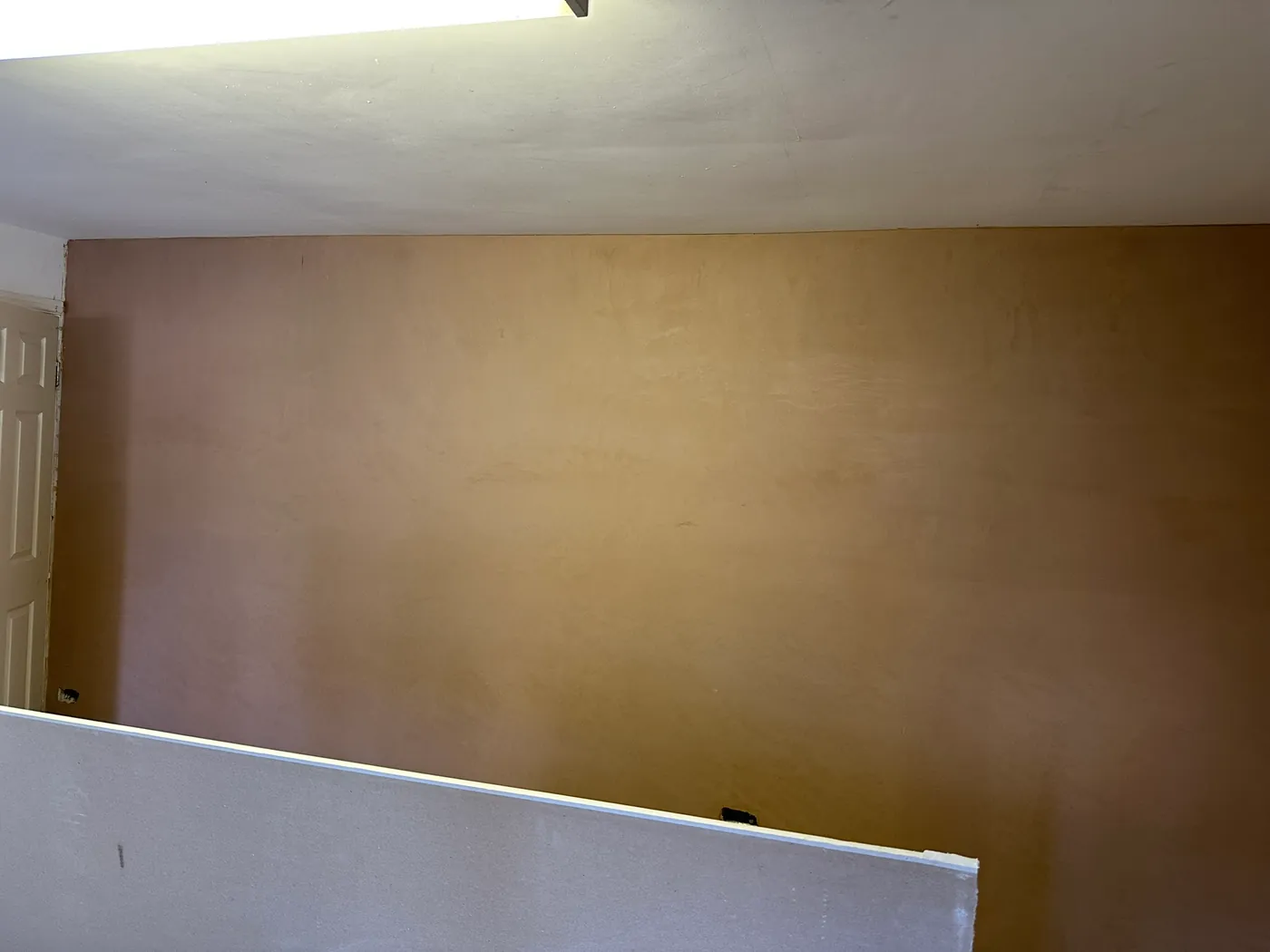
A thin skim often needs one to two weeks before a mist coat, while a full replaster commonly needs four to six weeks, roughly four weeks for every 5 mm of depth, and longer in winter. New plaster turns from dark brown to an even pale pink as it dries. The first coat of paint should be a thinned mist coat that soaks in and seals it; painting too soon with full-strength emulsion is the main reason new plaster peels.
How to choose a plasterer in London
- A written quote naming the method and materials
- Lime offered for old solid walls
- Asbestos testing raised for pre-2000 textured coatings
- Building Regulations and planning checked for render
- Public liability insurance
- Recent photos and reviews you can check
Questions
Plastering and rendering in London: frequently asked questions
How much does it cost to plaster a room in London?
Plastering a single room in London typically costs £550 to £1,100 in 2026, depending on its size, the ceiling height and whether the old plaster has to come off. Skimming sound walls costs about £18 to £32 per square metre, while replastering or boarding and skimming costs £30 to £58. A plasterer’s day rate in London is usually £280 to £480.
Should I skim or replaster my walls?
Skim if the existing plaster is sound and only cracked, dented or uneven. Replaster if it sounds hollow when tapped, moves when pressed, crumbles, or has been damaged by damp, because a skim over failing plaster will not last. Many jobs are a mix: hollow areas cut out and patched, then the whole wall skimmed for an even finish.
How long should plaster dry before painting?
A thin skim often needs one to two weeks, and a full replaster commonly needs four to six weeks, roughly four weeks for every 5 mm of plaster, and longer in cold, damp weather. It is dry when it turns an even pale pink with no dark patches. Start with a thinned mist coat so the finish coats do not peel.
Can you plaster over Artex?
Yes. Skimming over a sound textured ceiling, or overboarding it and skimming, seals the coating in without disturbing it, and typically costs £200 to £700 per ceiling. Artex applied before 2000 may contain asbestos, so have a sample tested at a UKAS-accredited lab, for about £50 to £100, before anyone sands, scrapes or drills it. Never dry-sand a textured coating.
How much does it cost to render a house in London?
UK guide prices for a mid-terrace are about £2,600 to £4,600 in sand and cement, £3,200 to £5,400 in monocouche and £3,600 to £7,000 in silicone, and London runs 15 to 30% higher. Scaffold, removing old render and repairs to the wall behind are extra. External wall insulation with a render finish costs more, about £110 to £200 per square metre.
Do I need planning permission to render my house?
In a conservation area, yes: rendering or pebbledashing any part of a house there is not permitted development. Elsewhere, render is usually allowed without permission if it gives a similar appearance to the existing house, which turning a brick front into render may not. Listed buildings always need consent. Check with your council’s planning team before ordering materials.
Does re-rendering need Building Regulations approval?
Often. Replacing the render on 25% or more of an external wall counts as renovation under Part L, so Building Regulations normally apply and the wall should be insulated to current standards at the same time, unless that is not technically feasible or would not pay back within 15 years. Small patch repairs do not trigger this.
Should old London houses be plastered with lime?
Usually, where the walls are solid brick and the original plaster or render is lime, as in most homes built before 1919. Lime lets moisture escape from the wall, while gypsum plaster and cement render can trap it and lead to damp, blown patches and cracking. Gypsum is fine on later cavity walls and on plasterboard.
Verified reviews
What London clients say about our plastering
★★★★★
“I have used a lot of contractors over the years and I must say Hussain is by far one of the very best I have used.”
Charles, Hackney Wick · Thin skim, one bedroom · April 2025
★★★★★
“Was very professional and polite, communicated clearly throughout the process, including a clear quote and what was included in the work. The work was completed as agreed and looks great! Left the house clean and tidy.”
Victoria, Watford · Plaster wall repair · May 2025
★★★★★
“Soraiz builders was great at communicating, professional and polite. His quote was reasonable and we are really pleased with the standard of his work.”
Philip · Plaster and skimming, 3 bedrooms · April 2024
★★★★★
“Excellent work amazing guy hardworking and committed. He plastered and paint my 2 rooms definitely use his services again”
Mr Zubair · Skimming and painting · November 2024
★★★★★
“Nice finishing and very clean work done”
Akash · Plastering a whole kitchen · March 2024
★★★★★
“They did a repair job for me and came the next day and finished the works in one day. Worked hard and the pricing was very fair for the hard work and in comparison to other quotes.”
ewald, Clapton · 3 room repair and touch up · December 2024
Six plastering and repair jobs from our 23 verified reviews on MyBuilder (rated 5.0), quoted in the clients’ own words.
Get started
Get a free plastering quote in London
Send photos of the walls, ceilings or outside of the house and your postcode. We reply within 2 hours during business hours and give you a written price before any work starts.
- Founded 2019
- 250+ London projects
- MyBuilder 5.0 from 23 verified reviews
- All 32 boroughs