
Builders in Harrow: Extensions, Loft Conversions & Renovations in HA1, HA2, HA3 & HA5
Soraiz Builders carries out extensions, loft conversions, renovations and full-trade building work across Harrow, from the Victorian streets of Harrow-on-the-Hill to the 1930s semis built along the Metropolitan and Bakerloo lines. Most of Harrow's housing came from a single, well-documented 1930s building boom once those lines reached the borough, and Harrow Garden Village around Rayners Lane station is a well-preserved example, with consistent rooflines and plot sizes running the length of its avenues. Call Shamraiz Hussain's team today and get a written quote within 2 hours.
Soraiz Builders provides extensions, loft conversions, renovations, plumbing, electrics and full building work across Harrow, including Harrow-on-the-Hill, Pinner, Stanmore, Wealdstone and Kenton. Harrow has 30 conservation areas, and parts of Pinner sit above historic chalk workings that have caused real ground collapses in the past. Soraiz Builders offers a written quote within 2 hours of enquiry.
Harrow School was founded in 1572, and St Mary's Church on Harrow-on-the-Hill has parts dating back to the 12th century, among the oldest buildings anywhere in outer London.
We respond within 2 hours during business hours.
Housing Stock by Area
What kind of houses does Harrow have?
Harrow is one of London's most consistently suburban boroughs, and most of its housing stock dates from a single, well-documented building boom rather than centuries of gradual change.
- Harrow-on-the-Hill and West Harrow (HA1): the borough's oldest housing, Victorian and Edwardian terraces around the historic hill town, alongside genuinely old buildings like St Mary's Church, with parts dating to the 12th century.
- Wealdstone, Kenton, North Harrow and most of the borough (HA1, HA2, HA3): 1930s semi-detached and detached Metro-land housing makes up the bulk of Harrow's homes, built rapidly after the Metropolitan and Bakerloo lines electrified and reached the area. Harrow Garden Village, built around Rayners Lane station, is a well-known example: bay-fronted semis with consistent rooflines and plot sizes along long, uniform avenues.
- Pinner (HA5): a similar mix of 1930s suburbia and an older village core, sitting on more complex ground than most of the borough. More on this below.
- Stanmore and Belmont (HA7): a mix of 1930s suburban housing and later, larger detached properties towards the northern, higher ground of the borough.
Common problems we see in Harrow properties
Harrow's building stock is more uniform in age than most London boroughs, which means its common problems are too, with one significant exception.
- Standard London Clay shrinkage on Victorian and Edwardian terraces: the older housing around Harrow-on-the-Hill and West Harrow sits on London Clay with the shallow foundations typical of that era, the usual seasonal shrink-swell pattern found across most of London.
- 1930s-specific defects: solid 9-inch brick walls with no cavity in the earliest examples, original single-glazed steel-framed windows, and ageing rendering are common across the borough's dominant Metro-land housing stock.
- Historic chalk workings under parts of Pinner: this is genuinely different from anything else in the borough. In March 2017, a large hole opened in the car park at Pinner Wood School, and investigation found the school sat above a disused, previously uncharted chalk mine with partially collapsed tunnels running beneath the buildings. The school closed for nine months while the tunnels were professionally in-filled. This sits where an anticline brings the Lambeth Group and Chalk close to the surface in northern Pinner, a different ground profile to the London Clay found through most of the rest of Harrow. It isn't a reason to worry about every Pinner property, but it is a real reason to get proper ground investigation done before any significant foundation or basement work in that specific area, rather than assuming standard London Clay advice applies borough-wide.
- Party wall issues on terrace and semi-detached streets: both the older terraces and the 1930s semis mean most rear extensions fall within 3 metres of a neighbouring property, triggering the Party Wall etc. Act 1996.
Local Area
Local landmarks and transport links relevant to building work in this area.
- Harrow School, Harrow-on-the-Hill, HA1
- Headstone Manor & Museum, HA2
- St Mary's Church, Harrow-on-the-Hill, HA1
Harrow-on-the-Hill (Metropolitan line, Chiltern Railways), Harrow & Wealdstone (Bakerloo line, London Overground, National Rail), North Harrow (Metropolitan line), Pinner (Metropolitan line), West Harrow (Metropolitan line)
Where We Work in Harrow
Where we work in Harrow
We cover the whole borough, HA1, HA2, HA3, HA5 and HA7, including:
- Harrow-on-the-Hill (HA1): the historic hill town around Harrow School, founded 1572, and St Mary's Church, parts of which date to the 12th century, inside the Harrow on the Hill Village Conservation Area.
- Wealdstone (HA3): Victorian and 1930s streets around Harrow & Wealdstone station, a major interchange for the Bakerloo line, London Overground and National Rail.
- Kenton (HA3): a 1930s Metro-land suburb built after Kenton station opened on the Bakerloo line, long avenues of bay-fronted semis on the Harrow and Brent border.
- North Harrow and West Harrow (HA1, HA2): Victorian terraces closer to the centre giving way to 1930s suburbia further out, all served by the Metropolitan line.
- Pinner (HA5): a well-preserved village core inside the Pinner Village Conservation Area, surrounded by 1930s suburbia, and home to Headstone Manor, a 14th-century moated manor house.
- Stanmore and Belmont (HA7): the borough's higher, northern ground, a mix of 1930s and larger later housing.
Working around Harrow's parking and access
Much of Harrow operates Controlled Parking Zones, particularly around Harrow-on-the-Hill and the main town centre. A council skip licence costs £82.30 for 14 days, with a further £82.30 for each additional two-week period, and if the skip needs a parking bay or CPZ space, a separate bay suspension is required, with the council asking for several working days' notice before delivery. We arrange builder's permits and skip licences in advance so materials and skips don't sit waiting on day one.
Check If We Cover Your Harrow Street
Get a Free QuotePlanning & Conservation
What to check before starting building work in this borough.
London Borough of Harrow (Harrow Council)
Planning portal: View planning permission information
Planning permission and conservation areas in Harrow
Harrow has 30 conservation areas, the most recent being West Drive and Bellfield Avenue, designated in June 2023. Around 15 of these 30 areas carry an Article 4 Direction that removes standard permitted development rights for extensions, alterations, replacement doors and windows, boundary treatments and hardsurfacing. Unlike some London boroughs, Harrow does not have a single borough-wide Article 4 Direction covering all suburban streets. Most standard rear extensions and loft conversions outside a conservation area keep normal permitted development rights, provided they meet national size and height limits.
Before planning any external work in Harrow, check your address on Harrow Council's planning pages to confirm your conservation area status and whether Article 4 applies. We do this on every Harrow quote as standard, since a property just one street apart from another can have a completely different planning position here.
Ground conditions vary sharply across the borough
Most of Harrow sits on London Clay, with Bagshot Beds sands forming the higher ground and Claygate Beds on the upper slopes around Harrow-on-the-Hill. Northern Pinner is the exception, where older chalk geology sits close to the surface and, as the Pinner Wood School incident showed, historic unmapped chalk workings can exist beneath properties. We treat ground investigation as genuinely necessary in Harrow rather than a box-ticking exercise, because the right answer really does depend on which part of the borough you're in.
What normally needs planning permission in Harrow
- Rear or side extensions on houses inside one of the 15 Article 4 conservation areas
- Loft conversions with dormers or roof-level changes in Article 4 areas
- Window and door replacements that change appearance, inside Article 4 areas
- Any work affecting a Listed Building, including several properties on and around Harrow-on-the-Hill
What usually doesn't
- Standard single-storey rear extensions outside a conservation area, within normal permitted development size limits
- Internal, non-structural work: new kitchen or bathroom in the same footprint, redecoration
- Like-for-like repairs outside Article 4 areas: matching roof materials, identical window replacements, repointing
What Building Work Costs in Harrow
| Item | Typical Cost | Note |
|---|---|---|
| Single-storey rear extension, per m² (mid specification) | £2,800 - £3,800 | Conservation area projects carry roughly 15% on top for material restrictions and period-appropriate detailing. |
| Dormer loft conversion (typical build cost) | £40,000 - £65,000 | Construction only; VAT and professional fees are additional. |
| Mansard loft conversion (typical build cost) | £60,000 - £95,000 | More involved than a dormer; typically needed to maximise headroom on steeper roof pitches. |
| Householder planning application fee | £548 | From April 2026. Applies inside 15 of Harrow's 30 conservation areas that carry an Article 4 Direction, or on a Listed Building. |
Services We Provide Across Harrow
Harrow Garden Village's 1930s semis need extensions that keep the estate's original brick and roofline consistent throughout.
Period homes around Harrow-on-the-Hill often still run on original pipework we upgrade without disturbing protected interiors.
Pinner's village houses need kitchen layouts that respect low ceiling heights while still opening the space right up.
Wealdstone and Kenton's semis get repainted on a rolling cycle we plan around each street's actual weather exposure.
Stanmore and Belmont's render needs resealing every decade or so, patch work we match to the original texture closely.
Recent projects in Harrow
Real Soraiz Builders jobs in Harrow, documented from the dated photos taken on site.
 10 photos
Wealdstone (Harrow)
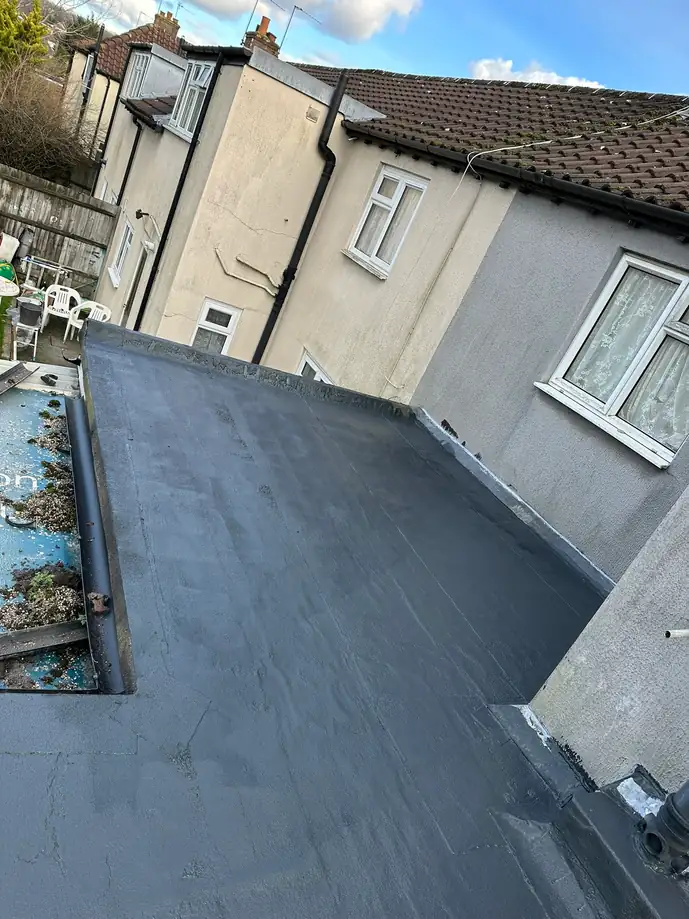
Flat roof re-covering over a rear extension in Wealdstone
The flat roof over a Wealdstone rear extension stripped and re-covered in six days in February 2026, with the water-damaged plaster inside patched once the roof was watertight.
Read the case study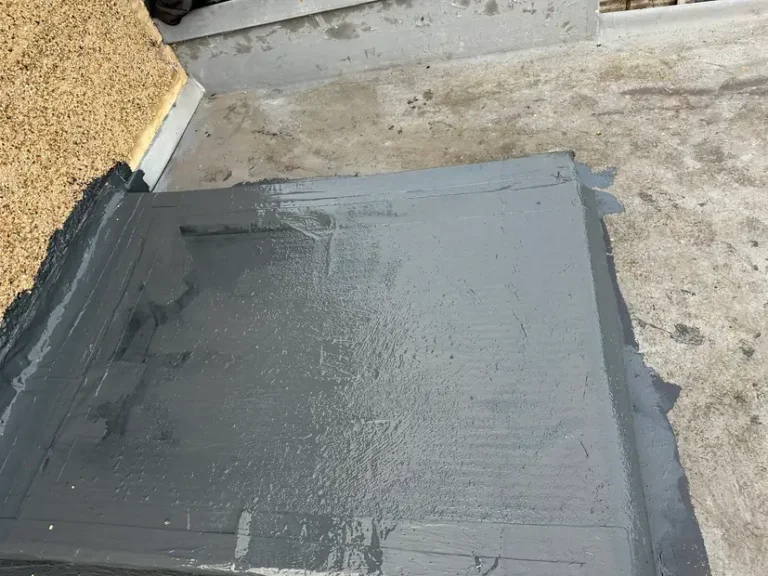 9 photos
Wealdstone (Harrow)
Flat roof edge repair in Wealdstone
A failed flat roof edge in Wealdstone, where the felt had lifted and the timber had rotted, cut back and repaired with a reinforced liquid membrane in January 2026.
Read the case study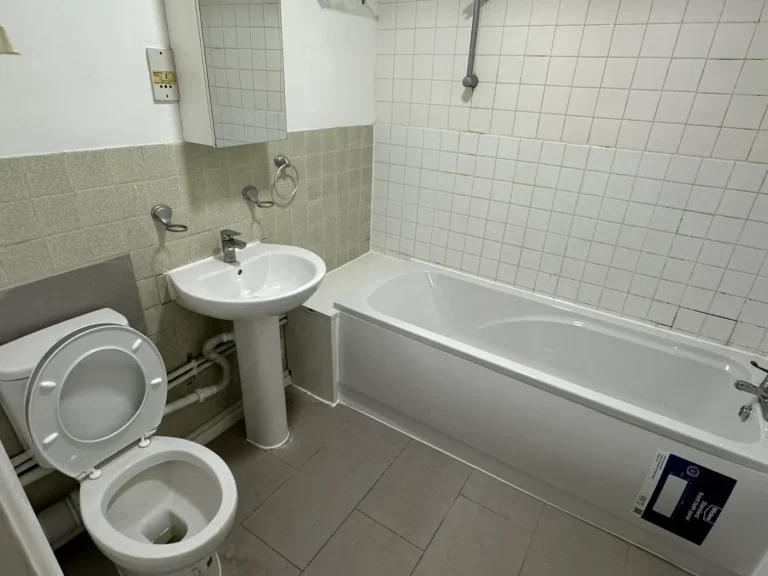 8 photos
Harrow Weald (Harrow)
Bathroom refit and flat refresh in Harrow Weald
A Harrow Weald flat turned around in a week in January 2026: a new bath and electric shower, new wood-effect flooring in the living room and hall, and a full repaint.
Read the case studyWhy Harrow Homeowners Choose Soraiz Builders
Soraiz Builders & Services Ltd was founded in 2019 by Shamraiz Hussain and has completed 250+ projects across all 32 London boroughs. On a Harrow job, that means checking conservation area and Article 4 status against all 30 designated areas, and factoring in Harrow's genuinely variable ground conditions, including the chalk geology found under parts of Pinner, rather than applying one standard approach borough-wide.
- 5.0 stars from 23 verified reviews on MyBuilder
- Fixed-price contracts as standard, no day-rate creep
- Founded 2019, 250+ completed projects across Greater London
- WhatsApp us directly on +44 7424 518632
- Free site visit, written quote within 2 hours
Frequently Asked Questions
Answers to the questions homeowners in this area ask most.
Do I need planning permission for an extension in Harrow?
It depends on the property. Harrow has 30 conservation areas, and around 15 of them carry an Article 4 Direction that removes standard permitted development rights. Outside those areas, most single-storey rear extensions within normal size limits keep permitted development rights. We check your exact status before recommending a route.
Is my street in a Harrow conservation area?
Harrow has 30 conservation areas, including Harrow on the Hill Village, Pinner Village and the more recently designated West Drive and Bellfield Avenue. Check your exact address on Harrow Council's planning pages, or ask us to check it as part of a free quote.
Why does ground condition matter more in some parts of Harrow than others?
Most of Harrow sits on standard London Clay, but northern Pinner sits where older chalk geology comes close to the surface. In 2017, a school in Pinner had to close for nine months after a previously unmapped chalk mine was discovered beneath the buildings following a ground collapse. We treat proper ground investigation as genuinely necessary in that area rather than a formality.
What's different about extending a 1930s semi in Harrow compared to a Victorian house?
1930s semis, which make up most of Harrow's housing, often have solid 9-inch brick walls with no cavity, original steel-framed windows and different foundation depths to a Victorian terrace. Extension and insulation design needs to account for that construction type rather than treating every period property the same way.
Do I need a Party Wall Agreement for building work in Harrow?
Very likely, whether you're in a Victorian terrace or a 1930s semi, since most rear extension or loft work falls within 3 metres of a neighbouring property. Notices need serving at least two months before work starts, and we handle this as part of the project rather than leaving it until after planning permission is granted.
Which parts of Harrow do you cover?
We cover the full London Borough of Harrow, including Harrow-on-the-Hill, Pinner, Stanmore, Wealdstone, Kenton and North Harrow, postcodes HA1, HA2, HA3, HA5 and HA7.
What happened at Pinner Wood School in 2017?
In March 2017, a large hole opened in the car park at Pinner Wood School, and investigation found the school sat above a disused, previously uncharted chalk mine with partially collapsed tunnels. The school closed for nine months while the tunnels were professionally in-filled. It's a real reason to get proper ground investigation done before significant foundation work in this specific part of Harrow, not a reason to worry about every Pinner property.
What is Harrow Garden Village?
Harrow Garden Village, built around Rayners Lane station, is a well-preserved example of the borough's 1930s Metro-land housing boom: bay-fronted semis with consistent rooflines and plot sizes along long, uniform avenues, built rapidly once the Metropolitan and Bakerloo lines electrified and reached the area.
Why does ground condition vary so much across Harrow?
Most of Harrow sits on London Clay, with Bagshot Beds sands forming the higher ground and Claygate Beds on the upper slopes around Harrow-on-the-Hill. Northern Pinner is the exception, where older chalk geology sits close to the surface and historic unmapped chalk workings can exist beneath properties, as the Pinner Wood School incident showed.
Are Stanmore and Belmont different from the rest of Harrow?
Stanmore and Belmont sit on the borough's higher, northern ground, with a mix of 1930s suburban housing and later, larger detached properties, generally on more generous plots than the denser Metro-land semis found through much of the rest of Harrow.
What are common defects in Harrow's 1930s houses?
Solid 9-inch brick walls with no cavity in the earliest examples, original single-glazed steel-framed windows, and ageing rendering are common across the borough's dominant Metro-land housing stock, particularly in the long avenues built rapidly once the Underground reached Harrow.
Other London Boroughs We Also Cover
Borders Harrow to the east, towards Edgware and Mill Hill.
Borders Harrow to the south east, towards Kenton and Wembley.
Borders Harrow to the south, towards Sudbury and Greenford.
Borders Harrow to the west, towards Ruislip and Northwood.
Get a Free Quote in Harrow
Whether you're near Harrow School, Harrow-on-the-Hill, HA1 or elsewhere in Harrow, Soraiz Builders provides building and renovation services throughout Greater London. A written quote follows within 2 hours.