
Roofing · All 32 London boroughs
Roofing in London: Repairs, Flat Roofs and Re-Roofing
London’s roofs range from slate butterfly roofs hidden behind Victorian parapets to felt flat roofs on 1980s rear extensions, and each one fails in its own way. Soraiz Builders repairs and replaces flat roofs, fixes pitched roofs, re-roofs whole houses, and handles chimneys, gutters, fascias and roof windows, with a reply to every enquiry within 2 hours.
Quick answer: 2026 London prices
Roofing in London costs £150 to £1,200 for most repairs, £55 to £150 per m² to replace a flat roof, and £7,500 to £13,000 to re-roof a three-bed semi in concrete tiles, including scaffolding. Slate or clay costs more, and London runs 20 to 30% above the UK average.
We reply within 2 hours during business hours. Photos of the problem help us price faster.
- Founded 2019
- 250+ London projects
- MyBuilder 5.0 from 23 verified reviews
- Fixed-price contracts
What we do
What roofing work do we carry out in London?
Six kinds of roofing work, from a single slipped tile to a full strip and re-roof. Most London jobs combine two or three of them, for example a re-roof that also needs new fascias and a re-flashed chimney.
Flat roof repair and replacement
Patch repairs, overlays and full replacement in torch-on felt, EPDM rubber, GRP fibreglass or a liquid-applied membrane, on extensions, garages, dormers and bays.
- Leak tracing and edge repairs
- Strip, new deck and insulation
- Upstands, trims and outlets
Pitched roof repairs
Slipped, cracked or missing tiles and slates replaced to match, ridges and hips re-bedded or dry-fixed, and valleys and flashings repaired where most leaks start.
- Tiles and slates matched
- Ridge and hip re-bedding
- Valley and flashing repairs
Full re-roofing
Strip to the rafters, check and repair the timbers, then new breathable membrane, battens and tiles or slates, with new ridges, valleys, lead and ventilation.
- Concrete, clay or slate
- Scaffolding and licences arranged
- Building Control notified
Chimneys and leadwork
Chimney stacks repointed, flaunching rebuilt, pots secured and lead flashings, soakers and back gutters renewed, the junctions where water most often gets in.
- Repointing and flaunching
- Lead flashing and soakers
- Stack repairs
Fascias, soffits and gutters
Rotten timber fascias and soffits replaced, usually in uPVC, with new guttering and downpipes sized to the roof, plus repairs to parapet and valley gutters.
- Fascias, soffits, bargeboards
- Gutters and downpipes
- Parapet gutter relining
Roof windows and skylights
New roof windows fitted into pitched roofs, leaking roof windows re-flashed or replaced, and rooflights in flat roofs installed with the right upstand. Turning the loft into a room is covered on Loft Conversion in London.
- Roof window fitting
- Re-flashing and replacement
- Flat rooflights
Every roofing job includes
- A survey and dated photos before we quote
- A written, itemised fixed-price quote
- Scaffolding or safe access arranged and licensed
- Waste removed, including old tiles and felt
- Building Control notified where the rules apply
- Photos of the finished work at handover
Repair or replace
Should you repair or replace your roof?
Repair when the problem is local and the covering is sound; replace when the covering itself has reached the end of its life. One slipped tile, a cracked flashing or a split in one corner of a flat roof is a repair. Repeated leaks in different places, sagging, or a covering past its expected lifespan usually means repairs are now money spent on a roof that needs replacing.
Signs a pitched roof is near the end: tiles or slates slipping in several places, rusted or failed nails (“nail fatigue” on old slate), a sagging ridge line, and daylight or damp felt visible from the loft. Signs a flat roof is near the end: blisters and cracks across the surface, standing water days after rain, soft spots underfoot, and leaks that move.
Quick check: tick what you can see
Nothing ticked: a targeted repair is usually the right first step.
A rule of thumb, not a survey. We confirm it on site with photos before quoting either option.
2026 costs
How much does roofing cost in London?
A full re-roof of a three-bed semi in London typically costs £7,500 to £13,000 in concrete tiles, including scaffolding, membrane, battens and waste, and takes one to two weeks.
Clay tiles add roughly a third and natural slate can double the material cost. The tables below are typical London market ranges, not fixed Soraiz Builders prices; every job is priced after a survey.
Full re-roof, pitched roofs
| Property and covering | Typical London cost | Duration | Notes |
|---|---|---|---|
| 2-bed terrace, concrete tiles | £6,000–£10,000 | 4–7 days | Smaller roof, but a shared scaffold line with neighbours |
| 3-bed semi, concrete tiles | £7,500–£13,000 | 5–10 days | The most common London re-roof, typically 70 to 100 m² of roof |
| 3-bed semi, clay tiles | £10,000–£17,000 | 6–10 days | Heavier, slower to lay, longer lifespan |
| 3-bed semi, natural slate | £12,000–£22,000 | 7–12 days | Welsh slate sits at the top of the range |
| 4-bed detached, tiles | £11,000–£20,000 | 8–14 days | Hips and valleys add labour |
Per m² of roof, 2026: concrete tiles £75–£130, clay £100–£180, natural slate £130–£320. Sources: less.co.uk London roofing costs (April 2026), BestBuilders new-roof cost guide (August 2026), MyBuilder and Trade2Base re-roofing guides (2026), Homebuilding & Renovating roof cost guide, with the 20–35% London uplift those sources report. Typical London market ranges, not fixed Soraiz Builders prices.
Flat roof replacement
| Covering | Per m², fitted | Typical lifespan | Best for |
|---|---|---|---|
| Torch-on felt | £55–£90 | 10–30 years | Budget re-covers, garages |
| EPDM rubber | £75–£120 | 25–50 years | Simple shapes, few joints |
| GRP fibreglass | £90–£150 | 25–50 years | Extensions, balconies, light foot traffic |
| Liquid-applied membrane | £60–£100 | varies by system | Awkward details, overlays on sound decks |
| Lead | £150–£200+ | very long | Bays, porches, period details |
By size, London, materials and labour: porch around 3 m² £400–£850; double garage around 30 m² £1,800–£4,000; rear extension around 40 m² £2,800–£5,500. Sources: MyJobQuote flat roof replacement London (September 2026), Trade2Base flat roof costs (2026), BestBuilders (2026); lifespans from Roofing Superstore, Ideal Home and less.co.uk lifespan guides. Typical London market ranges, not fixed Soraiz Builders prices.
Repairs, chimneys, roofline and roof windows
| Job | Typical cost | What it usually covers |
|---|---|---|
| Slipped or broken tiles | £150–£500 | A few tiles or slates replaced and matched, from a ladder or roof ladder |
| Ridge or hip re-bedding | £225–£550 | Lifting and re-bedding or dry-fixing ridge tiles, around £50–£70 per metre |
| Leak tracing and repair | £150–£1,200 | Minor leaks £150–£400; leaks needing a section stripped £400–£1,200+ |
| Flashing repair | £200–£600 | Lead or flashing renewed at a wall or abutment; stepped flashing £80–£120 per metre |
| Flat roof patch repair | £200–£600 | A localised split, blister or failed edge cut out and sealed |
| Chimney repointing | £450–£1,200 | Full stack repointed in 1–2 days; £1,000–£1,800 with brick and flaunching repairs |
| Chimney lead flashing | £600–£1,500 | Full renewal of apron, soakers and back gutter; £350–£920 for partial work |
| Fascias, soffits and gutters | £1,500–£4,000 | Terrace £1,500–£2,800, three-bed semi £1,800–£4,000 in uPVC |
| Roof window, standard size | £680–£1,300 | Supply and fit with flashing kit; electric or solar models cost more |
Sources: MyJobQuote (roof repair, ridge tiles, leak repair, chimney repointing, chimney leadwork, Velux windows), Trade2Base (roof repair, chimney, fascia and soffit, Velux), BestBuilders (roof repair, chimney, roofline, August 2026), Fantastic Services roofing guide (2026), Book A Builder UK (fascia, lead flashing). London prices run 20–30% above the UK average. Typical London market ranges, not fixed Soraiz Builders prices.
Costs outside the roofing price
| Item | Typical cost | When it applies |
|---|---|---|
| Scaffolding, two-storey house | £1,500–£2,600 | Full wrap for a re-roof; single elevation £150–£350 a week |
| Scaffold licence | £50–£200 | Any scaffold on the pavement or road; allow 1–3 weeks to obtain |
| Skip permit | £30–£260 | A skip on the road, varying by borough |
| Building Control fee | £200–£400 | Re-roofing above the thresholds in the regulations section below |
| Structural engineer | £300–£800 | A heavier new covering, or rotten or undersized rafters |
| ULEZ | £12.50 a day | Per non-compliant vehicle; many London trades price it in |
Sources: MyBuilder and Checkatrade scaffolding prices (2026), Lakeside Hire and less.co.uk scaffold guides, borough skip permit charges as used in our House Extension Cost in London (2026) guide, CompetentRoofer scheme guidance on Building Control fees, MyJobQuote structural engineer costs, Transport for London ULEZ charge.
Materials
Which roofing material lasts longest?
Natural slate lasts longest, commonly 50 to 100 years or more, followed by clay tiles at 50 to 60 years and concrete tiles at 30 to 60. On flat roofs, EPDM and GRP typically last 25 to 30 years and can reach 50, while traditional felt lasts 10 to 20 years, or around 30 for modern torch-on systems.
Lifespan depends as much on the details as on the material. Most roof leaks start at junctions: flashings against walls, valleys between slopes, the edges of flat roofs and the outlets that drain them. A good covering with a poor edge detail fails early.
Warm deck or cold deck: the flat roof choice that matters most
A cold deck has the insulation between the joists, under the boards, with a ventilated gap above it. A warm deck puts rigid insulation on top of the boards, under the waterproof layer, so the timber stays warm and dry. Many older London extensions are cold decks without enough ventilation, which is why ceilings under them show condensation and mould that looks like a leak. When a flat roof is fully replaced, converting it to a warm deck usually solves both the heat loss and the condensation, and it is the build-up Building Control expects.
An overlay, a new covering laid over a sound existing one, is cheaper and counts as a repair rather than a renovation. It only works when the deck underneath is dry and solid. If boards are soft or wet, overlaying traps the damage, so we cut a test section before recommending it.
Rules and permissions
Do you need permission to replace a roof in London?
Like-for-like roof repairs and replacement usually need no planning permission, but re-roofing more than half of a roof needs Building Regulations approval, and conservation areas, Article 4 directions and listed buildings add their own consents. Here is how each rule applies.
Building Regulations: the 50% and 25% thresholds
Under Part L of the Building Regulations and Approved Document L (2021), replacing the covering on more than 50% of a roof slope, or work affecting more than 25% of the whole building envelope, counts as renovating a thermal element. The roof must then be insulated to current standards, typically a U-value of around 0.16 to 0.18 W/m²K depending on where the insulation goes, where that is technically and economically feasible. On a flat roof, replacing the waterproof membrane is a renovation; overlaying a sound existing covering is treated as a repair.
If the new covering is more than 15% heavier than the old one, for example concrete tiles replacing slate, the roof structure must be checked, usually by a structural engineer, under Approved Document A. The same check applies if a much lighter covering could let the roof lift in high winds.
Roofers registered with the CompetentRoofer scheme can self-certify this work. Soraiz Builders is not a member of that scheme, so where the rules apply we notify Building Control at least 2 days before work starts and include the fee, typically £200 to £400, in the quote. You receive a completion certificate at the end, which you will need when you sell. Harrow Council’s own re-roofing guidance note sets out the same requirements for homes in the borough.
Planning permission, conservation areas and listed buildings
- Ordinary houses: replacing a roof covering like for like, or with a similar-looking material, does not normally need planning permission.
- Conservation areas with an Article 4 direction: changing the material or appearance needs planning permission, and councils often require natural slate or clay where that was the original covering. Bedford Park in Hounslow and many Camden conservation areas are examples.
- Listed buildings: re-roofing, and many repairs, need listed building consent.
- Roof windows: under permitted development (Class C of the General Permitted Development Order 2015), a roof window must not stick out more than 150 mm from the roof slope or sit higher than the ridge, and side-facing windows must be obscure-glazed and, if they open, sit at least 1.7 m above the floor.
Flats and maisonettes have no permitted development rights, so roof windows on a flat roof or a converted house usually need planning permission. Check with your council’s planning team if you are unsure; we do the same before quoting.
The Party Wall Act on terraced and semi-detached roofs
On a terrace or semi, the wall between you and your neighbour runs up through the roof. Under the Party Wall etc. Act 1996, cutting into that wall to fit a flashing, raising a parapet or altering a shared chimney stack needs a party wall notice, served at least two months before the work. Simply re-covering your own side of the roof normally does not. If your re-roof includes work to the party wall, we flag it at survey so the notice does not delay the start.
Bats, nesting birds and asbestos
Bats: all UK bats and their roosts are legally protected, and disturbing a roost is an offence. Roofs are a common roost site. If there are signs of bats, work stops for a bat survey, and a licence from Natural England may be needed; autumn is usually the safest time to re-roof. Birds: active nests are protected too, so eaves and fascia work during the spring and summer nesting season is checked first.
Asbestos: corrugated cement sheets on garages, sheds and some porches, and some older roofing felts and soffit boards, may contain asbestos if they date from before 2000. They should be tested before anyone drills, cuts or breaks them. Soraiz Builders does not remove asbestos; if a test is positive, it is dealt with by a specialist before our work starts.
Leasehold flats: who pays for the roof?
In most London leasehold blocks and converted houses, the roof belongs to the freeholder and is repaired through the service charge, but check your lease. If any one leaseholder’s share of the work will exceed £250, the freeholder must run a Section 20 consultation under the Landlord and Tenant Act 1985 before starting. Top-floor leaseholders with a leak should report it to the freeholder or managing agent in writing first.
London roofs
London roof types, and where each one leaks
London’s housing stock decides what goes wrong with its roofs. These are the four roof types we see most, and the weak point of each.
Victorian butterfly roofs
Common across Islington, Hackney, Camden and Lambeth terraces: two slopes falling inwards to a central valley gutter hidden behind the front parapet. From the street you cannot see it block, so the first sign is often water through the top-floor ceiling. Valley and parapet gutters need clearing, and their lead or felt linings need renewing as they age.
1930s hipped tile roofs
The semis and terraces of Harrow, Brent, Ealing and Hillingdon mostly have hipped roofs in clay or concrete tiles. After 80 to 90 years, the usual faults are failed ridge and hip mortar, nail fatigue, and original under-tile felt that has perished, which is when a full re-roof starts to make more sense than repairs.
Flat roofs on extensions and dormers
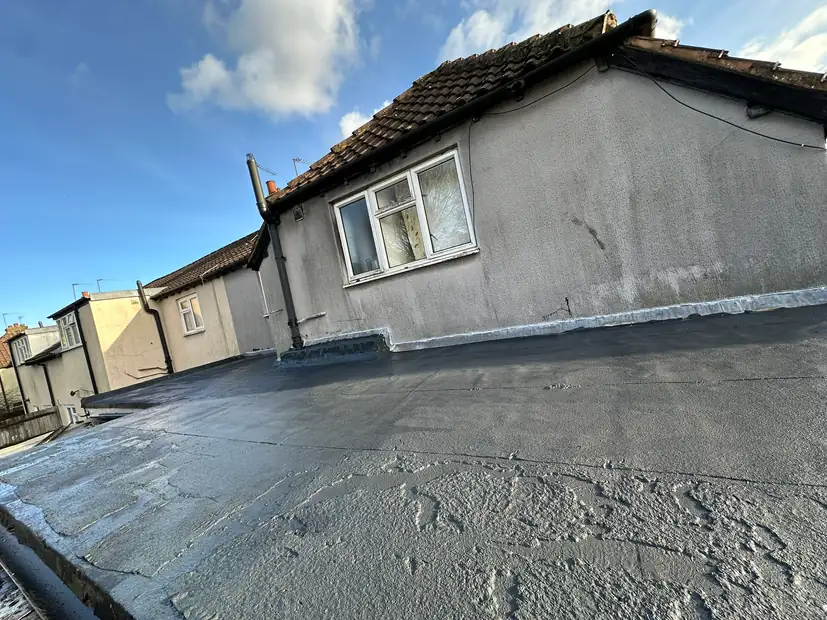
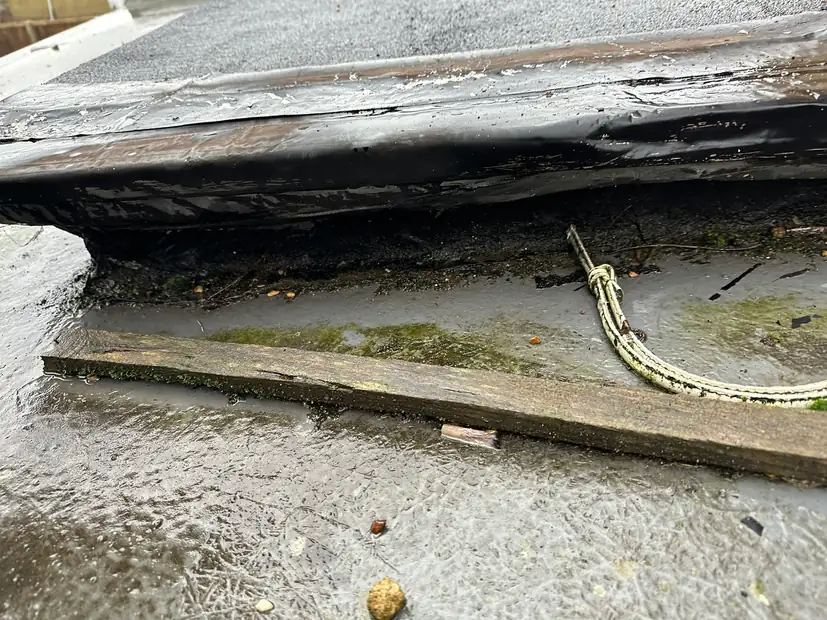
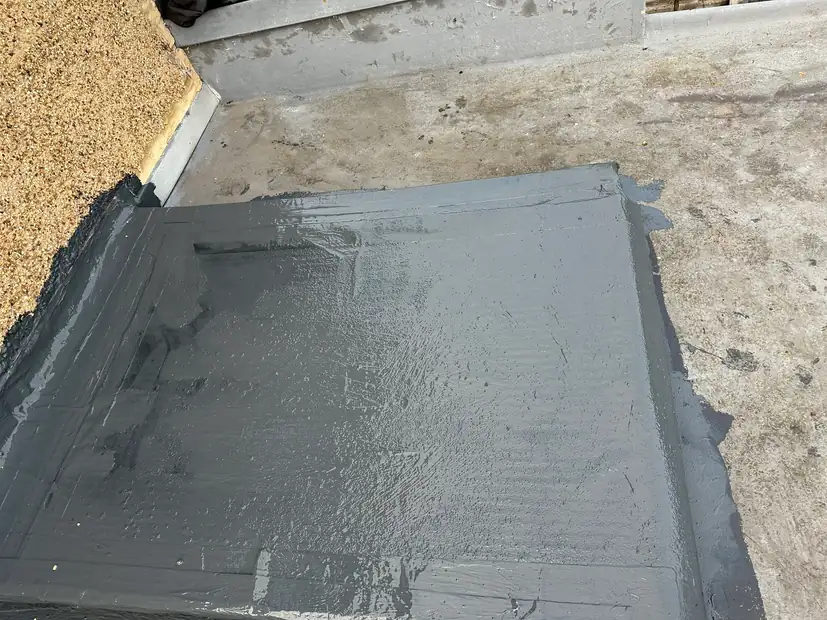
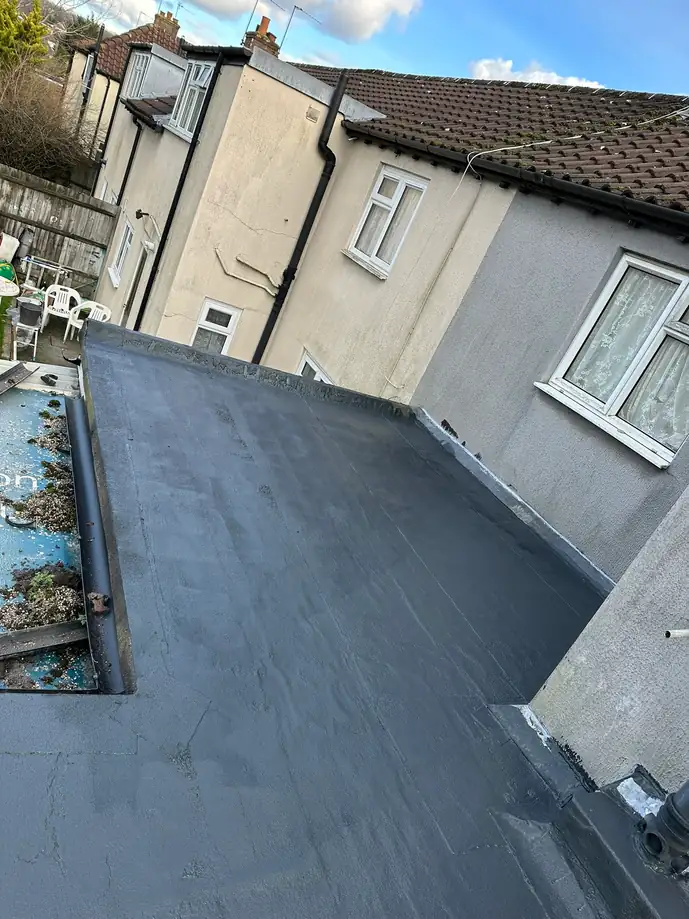
Rear extensions, garages and dormers from the 1960s to the 1990s, all over outer London, usually carry felt on a cold deck. They tend to fail at the edges, at upstands against the house wall and around outlets. The two Wealdstone roofs below are typical examples. Building a new extension with its own roof is a different job, covered on House Extensions in London.
Slate roofs in conservation areas
Natural slate on period houses in areas like Kensington and Chelsea, Richmond and Bedford Park often has to be repaired or replaced in slate to satisfy the conservation area rules. Slates can outlast the copper or iron nails holding them, so slipped slates in several places usually point to nail fatigue rather than bad slates.
Our photographed roofing jobs so far are flat roof repairs, re-covers and coatings in Harrow and Brent, shown below. For the wider picture of work done to London homes, see Projects & Case Studies.
Recent Roofing projects
Real jobs that included this work, documented from the dated photos taken on site.
 10 photos
Wealdstone (Harrow)
Flat roof re-covering over a rear extension in Wealdstone
The flat roof over a Wealdstone rear extension stripped and re-covered in six days in February 2026, with the water-damaged plaster inside patched once the roof was watertight.
Read the case study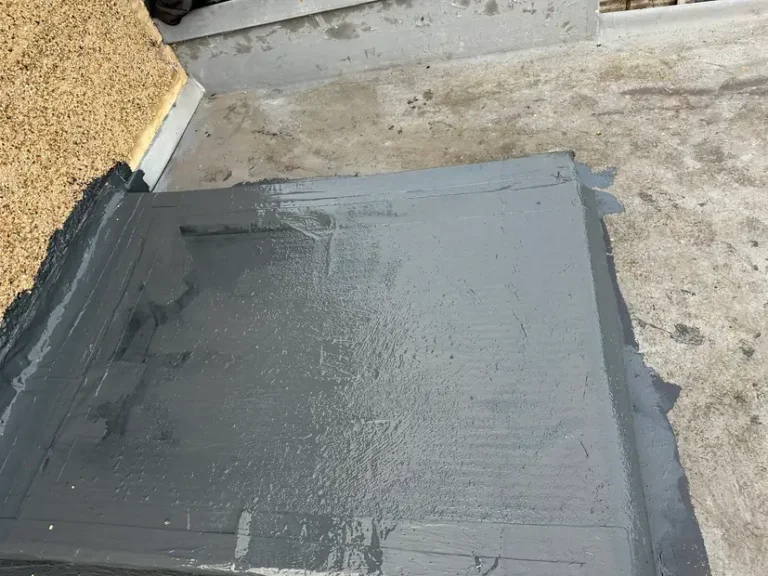 9 photos
Wealdstone (Harrow)
Flat roof edge repair in Wealdstone
A failed flat roof edge in Wealdstone, where the felt had lifted and the timber had rotted, cut back and repaired with a reinforced liquid membrane in January 2026.
Read the case study 13 photos
Wembley Central (Brent)
Insulation, bathroom refit and flat roof repair in Wembley
A Wembley job run in phases over eight weeks in 2025: a room insulated and re-boarded, a bathroom and shower room refitted, and two sections of flat roof repaired and coated.
Read the case studyHow it works
How does a roofing job run, from first call to handover?
Send photos and get a reply within 2 hours
A photo of the ceiling stain and one of the roof from the garden or street lets us tell you straight away whether it looks like a repair or something bigger.
Survey and written quote
We inspect from the loft and the roof, trace where the water is actually getting in, photograph what we find and give you an itemised fixed-price quote, with any repair-or-replace choice laid out side by side.
Permissions and access
We arrange the scaffold and its licence, notify Building Control where the rules apply, and flag any party wall notice, freeholder consent, bat check or asbestos test before a date is set.
The work
The roof is stripped only as far as can be made watertight the same day, with temporary covers in place overnight. Timbers are checked as soon as they are exposed, and anything unexpected is photographed and agreed in writing before it is added.
Sign-off and handover
You get photos of the finished roof, the Building Control completion certificate where one applies, and the site cleared of old tiles, felt and debris.
Leaks and storms
What should you do if your roof starts leaking?
Contain the water, photograph everything, and get the leak traced before deciding on a fix. Put a container under the drip, move belongings, and if a ceiling bulges with water, keep people clear of it. Photos of the ceiling, the roof and any fallen tiles help both the repair and an insurance claim. Once the roof is watertight and the ceiling has dried out, stained or blown plaster can be cut out and made good; see Plastering & Rendering in London.
Home insurance usually covers storm damage, typically defined as winds of around 55 mph or heavy rainfall, but not gradual wear and tear. Claims are often turned down when the storm only exposed a roof that was already failing, which is why a written survey with dated photos matters. Check your policy before paying for permanent work, and keep the receipts for anything done to stop further damage.
How do you spot a roofing scam?
Trading Standards warn about a common pattern: a cold caller says they have spotted loose tiles, quotes low, then finds much bigger problems once on the roof. Never agree work on the doorstep, get at least three written quotes, check the company on Companies House, and do not pay large sums upfront. For contracts agreed in your home over £42, you normally have 14 days to cancel.
What should a roofing quote include?
- Scaffolding, licence and duration
- The exact covering, membrane and battens
- Ridges, valleys, lead and ventilation
- How rotten timber will be priced if found
- Building Control, if the thresholds apply
- Waste removal and skip or permit costs
- A written workmanship guarantee and its terms
- Payment stages tied to finished work
Questions
Roofing in London: frequently asked questions
How much does a new roof cost in London?
A new roof on a three-bed semi in London typically costs £7,500 to £13,000 in concrete tiles, including scaffolding, membrane, battens and waste. Clay tiles cost around £10,000 to £17,000 and natural slate £12,000 to £22,000. A small terrace starts nearer £6,000, and a four-bed detached house can reach £20,000. London prices run 20 to 35% above the UK average.
Do I need planning permission to replace my roof?
Usually not, if the new covering looks the same as the old one. You do need permission to change the material or appearance in a conservation area covered by an Article 4 direction, and listed buildings need listed building consent for re-roofing. Flats have no permitted development rights, so new roof windows on a flat usually need planning permission. Your council’s planning team can confirm.
Do I need Building Regulations approval to re-roof?
Yes, if you replace the covering on more than 50% of a roof slope, or more than 25% of the building envelope. The roof must then be insulated to current Part L standards where feasible, and a covering more than 15% heavier than the old one needs a structural check. Building Control is notified before work starts and issues a completion certificate, which you will need when selling.
How long does a roof replacement take?
A full re-roof of a typical London semi takes five to ten working days once the scaffold is up, and a flat roof replacement usually takes one to three days. Allow one to three weeks before the start for the scaffold licence. Wet or windy weather can add days, because the roof is only stripped as far as can be made watertight the same day.
Is it better to repair or replace a roof?
Repair when the fault is in one place and the covering is otherwise sound, such as a slipped tile, a cracked flashing or one split on a flat roof. Replace when leaks keep appearing in different places, tiles slip all over the roof, the deck is soft or sagging, or the covering is past its expected lifespan. A survey with photos should show which applies before you pay for either.
How long does a flat roof last?
A traditional felt flat roof lasts around 10 to 20 years, and a modern torch-on felt system up to about 30. EPDM rubber and GRP fibreglass typically last 25 to 30 years and can reach 50 when the edges, upstands and outlets are detailed well. Most flat roofs fail early at those details rather than across the main surface, so the workmanship matters as much as the material.
Which flat roof is best: felt, EPDM or GRP?
It depends on the roof. EPDM rubber suits simple shapes because it goes on in one sheet with few joints. GRP fibreglass suits extensions and balconies that get foot traffic, and gives a hard, seamless finish. Torch-on felt is the budget option and is still reliable on garages. Whichever you choose, a warm deck build-up with insulation above the boards usually matters more than the covering.
Who pays for roof repairs in a leasehold flat?
In most leasehold buildings the roof belongs to the freeholder, who repairs it and recovers the cost through the service charge, but your lease sets the exact terms. If one leaseholder’s share will exceed £250, the freeholder must consult leaseholders under Section 20 of the Landlord and Tenant Act 1985 before work starts. Report a roof leak to the freeholder or managing agent in writing.
Verified reviews
What London clients say about Soraiz Builders
★★★★★
“Soraiz Builders were a pleasure to deal with. They were responsive to my messages, had reasonable pricing, were timely for their appointments and completed the work to a good standard.”
Dillon, Woolwich · Painted entrance hallway and stairwell · March 2025
★★★★★
“Was very professional and polite, communicated clearly throughout the process, including a clear quote and what was included in the work. The work was completed as agreed and looks great!”
Victoria, Watford · Plaster wall repair · May 2025
★★★★★
“They were very professional. Came on time, did exactly as they said and did an excellent job.”
Sharon, North Finchley · Hall, bedrooms and lounge painted · April 2025
Rated 5.0 from 23 verified reviews on MyBuilder. These reviews reflect Soraiz Builders’ wider portfolio of work across London.
Get started
Get a free roofing quote in London
Send a photo of the problem and tell us your postcode. We reply within 2 hours during business hours, then survey the roof and give you a written, itemised quote.
- Founded 2019
- 250+ London projects
- MyBuilder 5.0 from 23 verified reviews
- All 32 boroughs